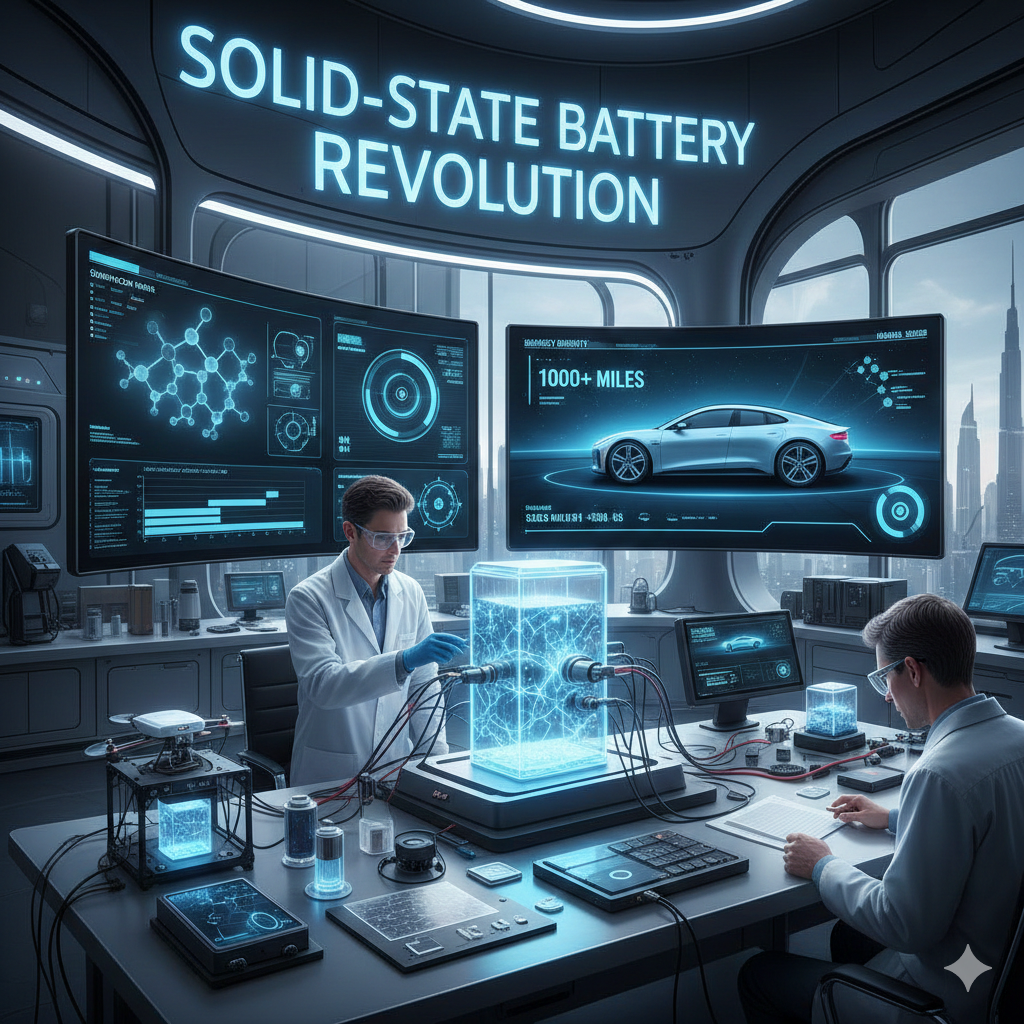
As we navigate through 2026, the energy sector is witnessing its most profound transformation since the industrial revolution. For decades, Lithium-ion batteries have been the lifeblood of our digital and mobile lives, but they have always carried inherent flaws: flammability, slow charging, and limited energy density. Today, the Solid-State Battery (SSB) has officially moved from laboratory prototypes to the production lines of global giants, signaling the “Solid Revolution.” This technology replaces the volatile liquid electrolyte found in traditional batteries with a solid conductive material, unlocking a future of safe, high-range, and ultra-fast charging transportation.
The Technical Foundations of Solid-State Technology
To understand why this is a revolution, we must look at the chemistry. In a conventional battery, ions move through a liquid electrolyte. This liquid is sensitive to heat and can leak or catch fire under stress. Solid-state batteries utilize a solid ceramic or polymer electrolyte. This not only makes the battery physically safer but also allows for a much more compact design. By removing the need for cooling systems and bulky separators, manufacturers can pack significantly more energy into the same physical space.
Eliminating Range Anxiety: The 1,000 KM Goal
The primary barrier to mass EV adoption has always been range. With the integration of solid-state cells, range anxiety is becoming a relic of the past. Current benchmarks in 2026 show that solid-state packs can achieve double the energy density of Lithium-ion. For the consumer, this translates to electric vehicles that can travel over 1,000 kilometers on a single charge—surpassing the distance of most petrol-powered cars. This leap is fundamental for the heavy-duty transport, aviation, and maritime industries, which require massive power in a lightweight form.
The Role of Silicon Anodes
A key partner in the solid-state revolution is the use of high-capacity silicon anodes. Unlike the graphite anodes used in previous generations, silicon can hold significantly more lithium ions. However, in liquid batteries, silicon expands and breaks. The rigid structure of a solid electrolyte provides the mechanical support needed to harness silicon’s potential, further pushing the boundaries of how much energy we can store in a single cell.
Safety Standards and Thermal Stability
In the age of autonomous and high-performance transport, safety is non-negotiable. Traditional liquid batteries are prone to “thermal runaway”—a chain reaction where a single overheated cell can lead to a fire. Solid-state electrolytes are inherently non-flammable and can operate at much higher temperatures without degradation. This eliminates the risk of catastrophic battery fires, making EVs the safest vehicles on the road in 2026.
Charging at the Speed of Petrol
One of the most exciting aspects of this revolution is ultra-fast charging. Because solid electrolytes are not prone to “dendrite” growth (metallic spikes that cause short circuits during fast charging), we can now safely pump massive amounts of power into a battery. In 2026, the new industry standard is a 0% to 80% charge in under 10 minutes. This turnover rate is transforming charging stations into high-efficiency hubs that mimic the convenience of traditional gas stations.
Durability and Lifecycle Longevity
Longevity has long been a concern for EV owners worried about battery replacement costs. Solid-state batteries are significantly more durable. While a liquid-based battery might begin to degrade after 1,000 cycles, early data from solid-state deployments suggest a lifespan of over 5,000 cycles. This means the battery will likely outlast the vehicle itself, creating a robust secondary market for used batteries in home energy storage systems.
Geopolitical Impact and Sourcing Ethics
The race for solid-state supremacy is reshuffling the global geopolitical deck. Nations that previously dominated the liquid electrolyte supply chain are now competing with new innovators in solid ceramic production. Moreover, the solid-state transition is reducing our reliance on controversial minerals like cobalt. By moving toward more abundant materials, the industry is addressing the ethical and environmental concerns that have long shadowed the battery industry.
Manufacturing Challenges and the Path to Mass Market
Despite the benefits, the road to 2026 was not easy. Scaling solid-state production required entirely new manufacturing processes, moving away from “wet” coating to dry electrode assembly. While initial costs were high, the massive investments from companies like Toyota, Samsung, and QuantumScape have driven down prices. By late 2026, solid-state tech is moving from high-end luxury vehicles into mid-range family SUVs, with a total market takeover expected by 2030.
Conclusion: Powering the Second Century of Mobility
The Solid-State Battery Revolution is more than a technological upgrade; it is the cornerstone of a sustainable civilization. By providing safe, dense, and fast-charging energy, it has finally broken the last chains tethering humanity to fossil fuels. As we move forward, the implications of this breakthrough will be felt far beyond the road—powering the next generation of electric aircraft, medical implants, and grid-scale storage. The future is solid, stable, and infinite. We are no longer waiting for the energy of tomorrow; we are already driving it.