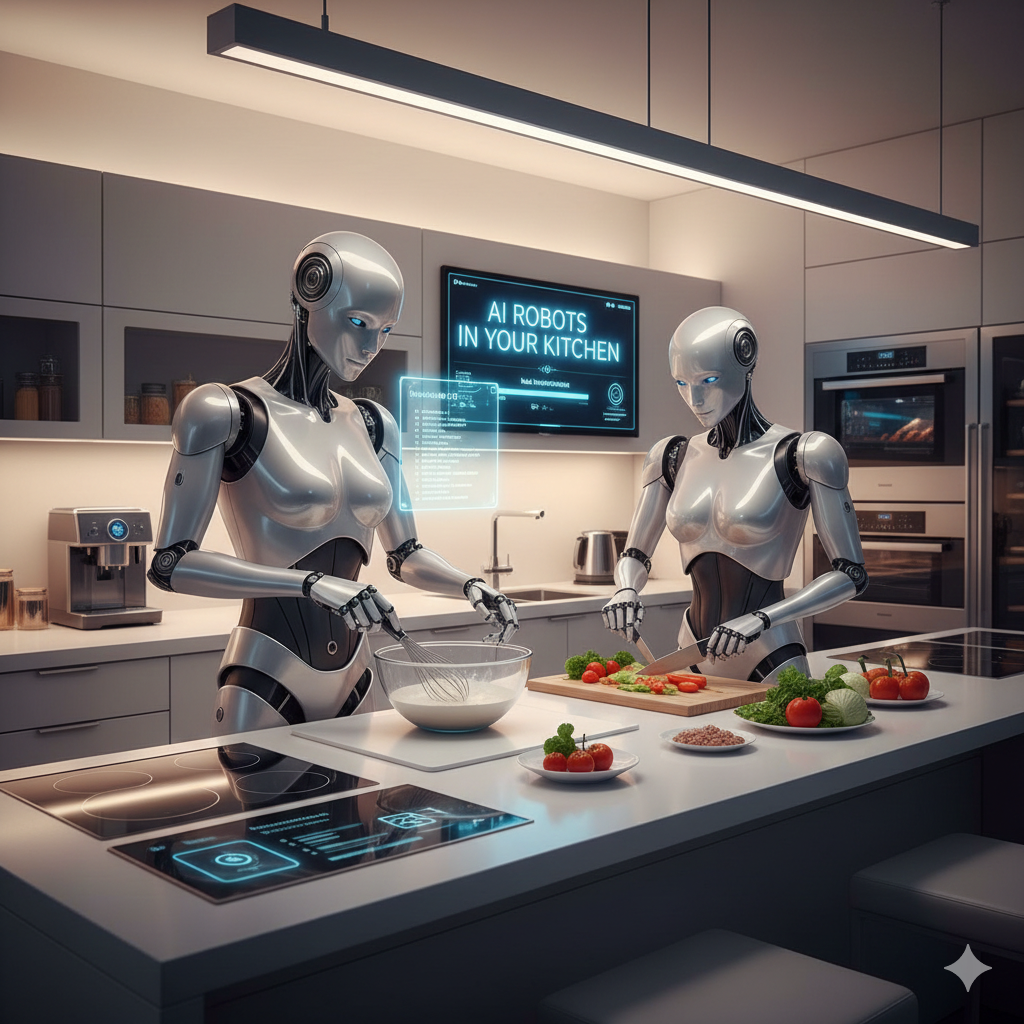
The year 2026 has brought the science-fiction dream of a robotic butler into the most important room of the house: the kitchen. For decades, kitchen technology was limited to simple appliances like blenders and microwaves. Today, we are witnessing the rise of **AI Robots in the Kitchen**—fully autonomous systems capable of chopping, sautéing, seasoning, and even plating five-star meals. These are not just machines; they are intelligent culinary partners that learn your taste preferences, manage your groceries, and ensure that a healthy, chef-quality meal is ready the moment you walk through the door.
The Evolution of the Robotic Chef
The journey to the robotic kitchen began with automated stirrers and smart ovens, but the 2026 generation of robots represents a quantum leap in manual dexterity and sensory intelligence. Modern kitchen robots are equipped with high-precision bionic arms that mimic the delicate movements of a human chef. These arms are integrated into the kitchen ceiling or cabinetry, allowing them to access the stove, sink, and prep area with 360-degree mobility.
Computer Vision and Ingredient Recognition
At the heart of these robots is advanced Computer Vision. Using high-resolution cameras and spectral sensors, the robot can identify thousands of ingredients, assess the ripeness of a tomato, and even detect the fat content in a piece of steak. This “visual intelligence” ensures that the robot adjusts cooking times and temperatures based on the specific quality of the ingredients at hand, ensuring consistency that even professional human chefs struggle to maintain.
Haptic Feedback and Texture Mastery
Cooking is as much about touch as it is about taste. The latest kitchen robots utilize haptic sensors in their robotic hands to “feel” the resistance of a knife through an onion or the elasticity of a kneading dough. This sensory feedback allows the AI to make micro-adjustments in real-time, preventing over-kneading or ensuring the perfect “sear” on a scallop. The result is a texture and flavor profile that feels authentically hand-crafted.
Autonomous Grocery and Waste Management
A kitchen robot is more than just a cook; it is a full-scale kitchen manager. Integrated with your smart refrigerator and pantry, the AI tracks every gram of ingredient used. When supplies run low, the robot autonomously orders groceries from decentralized local hubs, ensuring that the kitchen is always stocked for your planned weekly menu.
Personalized Nutrition and Health Integration
In 2026, the kitchen robot is directly linked to your wearable health devices. If your smartwatch detects a deficiency in iron or a need for higher protein after a workout, the robot automatically suggests and prepares a meal tailored to your biological needs. This “Bio-Digital Health” integration is transforming the kitchen into a wellness center, where food is truly used as medicine to optimize human performance and longevity.
Zero-Waste Cooking and Sustainability
Sustainability is a core focus of robotic gastronomy. AI algorithms are designed to minimize food waste by utilizing every part of an ingredient. The robot can suggest recipes based on items that are about to expire and can precisely calculate portion sizes to ensure nothing is thrown away. This precision is helping households reduce their environmental footprint while saving significant money on monthly grocery bills.
The Impact on Daily Life and Society
The widespread adoption of AI robots in the kitchen is fundamentally changing how families interact. By reclaiming the 2 to 3 hours a day typically spent on meal prep and cleanup, people are spending more quality time with their loved ones. Furthermore, it is democratizing healthy eating—making it possible for busy professionals and elderly individuals to enjoy nutritious, complex meals that they otherwise wouldn’t have the time or physical ability to prepare.
Safety, Hygiene, and Maintenance
Safety is the primary concern for any robotic system operating around heat and sharp objects. Kitchen robots are equipped with LiDAR and ultrasonic sensors to detect human presence, immediately slowing down or stopping if a child or pet enters the workspace. Additionally, these robots are designed with self-cleaning capabilities, utilizing UV-C light and steam to sanitize surfaces, ensuring a level of hygiene that far exceeds traditional human-led kitchens.
Future Outlook: The Multi-Functional Home
As we look toward 2030, the kitchen robot will move beyond the countertop. We are seeing the development of “Swarm Kitchens,” where smaller robots handle specific tasks like cleaning floors and washing dishes, while the main chef-agent focuses on the artistry of cooking. This interconnected ecosystem will make the “fully autonomous home” a standard reality for the next decade.
Conclusion
The rise of AI robots in the kitchen is not just about convenience; it is a revolution in how we nourish ourselves. By merging high-speed AI reasoning with bionic precision, we have unlocked a future where high-quality, healthy, and personalized food is accessible to everyone at the touch of a button. The kitchen robot is the new heart of the smart home—a tireless, intelligent, and creative partner that is redefining the culinary experience for the 21st century. The future is here, and it’s delicious.