The year 2026 marks a defining moment in human history. We are no longer a species confined to a single planet. The successful deployment and recurring flights of the **SpaceX Starship** have transformed the dream of multi-planetary life into a tangible reality. Starship is not just a rocket; it is a fully reusable transportation system designed to carry both crew and cargo to Earth orbit, the Moon, Mars, and beyond. This technological marvel is the key to ensuring the survival of consciousness by making life multi-planetary, fundamentally altering our place in the cosmos.
The Engineering of the Starship Era
At over 120 meters tall, Starship is the most powerful launch vehicle ever built. Unlike previous rockets that were largely expendable, Starship is designed for rapid reusability, similar to a commercial aircraft. This engineering philosophy has reduced the cost of reaching space by over 100 times, making Mars colonization economically feasible for the first time in history.
Raptor Engines and Methalox Fuel
The heart of Starship is the Raptor engine—a full-flow staged combustion engine that uses sub-cooled liquid methane and liquid oxygen (Methalox). The choice of methane is strategic: it can be synthesized on Mars using the Sabatier process, which combines Martian atmospheric carbon dioxide with water ice found in the soil. This “In-Situ Resource Utilization” (ISRU) allows Starship to refuel on Mars for the return journey to Earth, creating a sustainable two-way bridge between planets.
Full Reusability and Orbital Refilling
One of the most critical breakthroughs of 2026 is orbital refilling. A single Starship launch cannot carry enough fuel to reach Mars with a heavy payload. Instead, SpaceX utilizes a fleet of “Tanker” Starships to refill the Mars-bound ship in Earth’s orbit. This allows the primary Starship to depart for deep space with its full 100-ton cargo capacity, enabling the transport of heavy machinery, life support systems, and large human crews across the solar system.
Life on Mars: Building the First Settlement
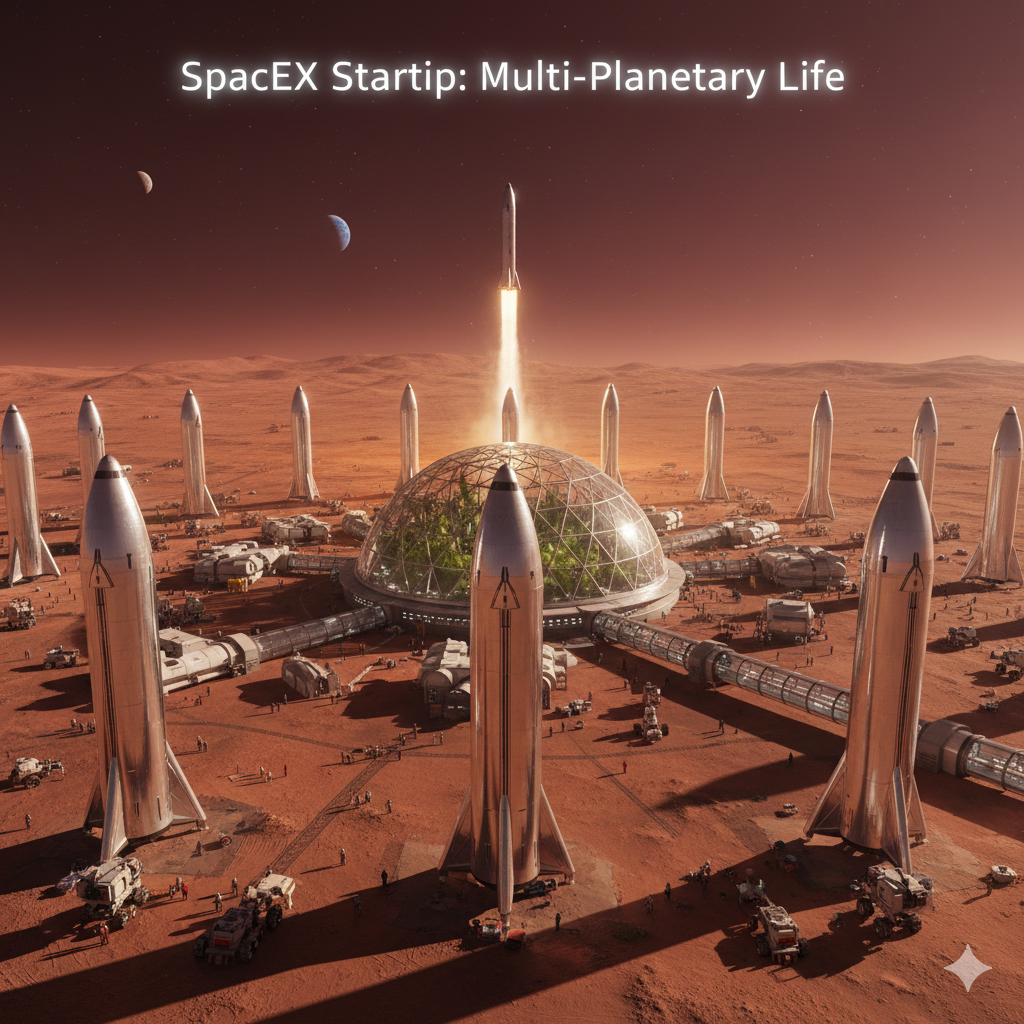
With the first fleet of uncrewed Starships having successfully landed on Mars in the early 2020s, 2026 is the year of the “Alpha Base” expansion. The focus has shifted from mere survival to the establishment of a self-sustaining city. These early settlements are composed of pressurized modules, specialized 3D-printed habitats made from Martian regolith, and vast underground tunnel networks protected from cosmic radiation.
Sustainable Life Support and Agriculture
Living on Mars requires a closed-loop life support system. Oxygen is generated via electrolysis and atmospheric processing, while water is extracted from subsurface ice. Martian agriculture is conducted in hydroponic and aeroponic greenhouses using advanced LED lighting. In 2026, researchers have successfully harvested the first “Martian crops,” proving that humans can grow their own food in the red soil, a vital step toward independence from Earth’s supply chain.
The Martian Economy and Governance
As the population on Mars grows, a new social and economic structure is emerging. The Martian colony operates on a decentralized digital economy, utilizing blockchain technology for transparent resource management. Governance on Mars is experimental, moving toward a direct-democracy model where every settler has a voice in the base’s operations. This is truly the birth of a new branch of human civilization, governed by the unique challenges of the Martian environment.
Moon Base: The Proving Ground
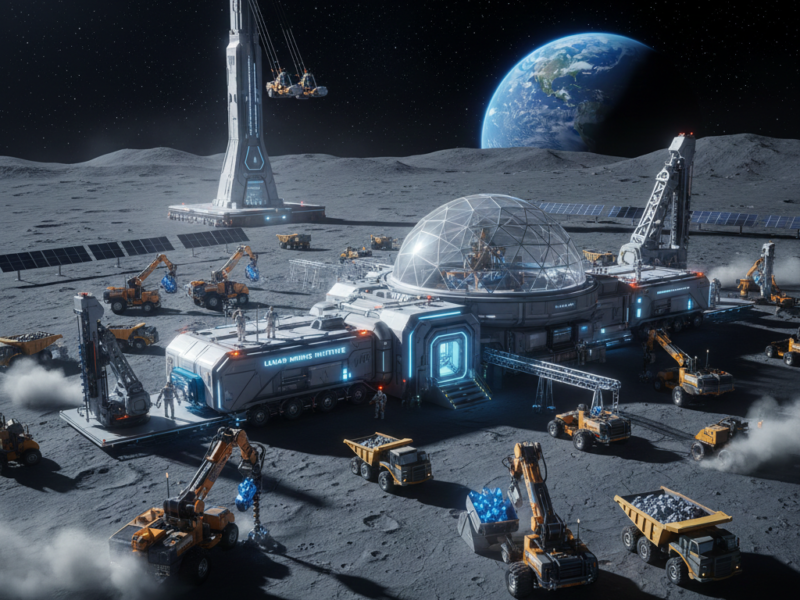
Before humanity reaches Mars in massive numbers, the Moon serves as a critical testing ground. The Starship HLS (Human Landing System) is currently facilitating the establishment of a permanent lunar base at the South Pole. This base allows SpaceX and NASA to test long-duration life support and ISRU technology in a lower-gravity environment, ensuring that every system is perfected before the long 6-month journey to Mars.
Scientific Discovery and Deep Space Telescopes
The Starship era has also revolutionized science. With its massive payload bay, we have successfully deployed the next generation of space telescopes that are 10 times larger than the James Webb. These instruments are peering into the atmospheres of exoplanets and searching for signs of life around distant stars, all while Starship provides a cost-effective way to maintain and upgrade these orbital laboratories.
Future Outlook: Beyond the Red Planet
As we look forward to 2030 and beyond, Starship will move toward the outer solar system. We are already planning missions to the moons of Jupiter and Saturn, specifically Europa and Enceladus, where subsurface oceans may harbor extraterrestrial life. Starship’s sheer size and power make these multi-year journeys possible, turning our solar system into a neighborhood that humanity can finally explore.
Conclusion
The rise of SpaceX Starship has forever ended the era of “Earth-only” humanity. By merging radical engineering with a vision for the future, we have unlocked the stars. Multi-planetary life is no longer a question of “if,” but “when.” As the first pioneers prepare for their departure in 2026, we stand on the precipice of a new golden age—one where the light of human ingenuity shines across the void of space. The multi-planetary revolution has begun, and the universe is waiting.