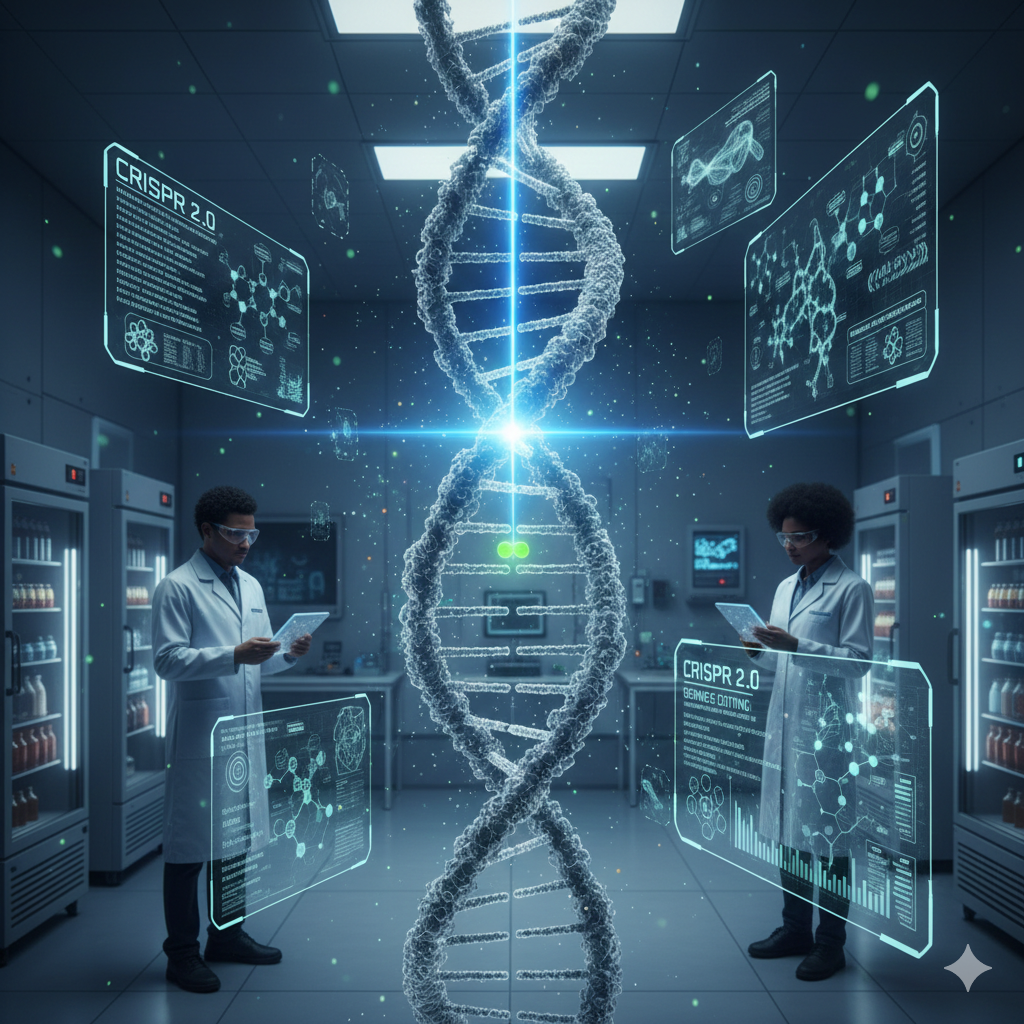
The dawn of 2026 has brought humanity to the threshold of a biological renaissance. For decades, we were merely observers of the genetic code that defines our existence, but with the arrival of **CRISPR 2.0**, we have become its editors. While the original CRISPR-Cas9 technology allowed us to “cut” DNA, it was often compared to a pair of molecular scissors that could sometimes be blunt. CRISPR 2.0 represents a far more sophisticated toolkit: molecular pencils and erasers. Through advancements like Base Editing and Prime Editing, we can now rewrite individual letters of the genetic code with surgical precision, offering hope for curing thousands of previously untreatable hereditary diseases and fundamentally reshaping the future of medicine.
Understanding the Leap: From Scissors to Pencils
The first generation of CRISPR relied on creating double-strand breaks in DNA. While effective, the cell’s natural repair mechanisms could sometimes introduce errors during the “healing” process. CRISPR 2.0, however, avoids these heavy-handed cuts. Instead, it utilizes enzymes to chemically transform one DNA base into another (e.g., changing a C to a T) without breaking the DNA backbone. This “Base Editing” is significantly safer and more predictable, making it a viable option for clinical treatments in 2026.
Prime Editing: The “Search and Replace” of Biology
If Base Editing is a molecular eraser, Prime Editing is the ultimate “search and replace” function for the genome. It can delete, insert, or swap large sections of DNA with unprecedented accuracy. In 2026, researchers are using Prime Editing to address complex genetic mutations that involve multiple changes in the DNA sequence. This capability is the holy grail of biotechnology, allowing us to correct the vast majority of the 75,000 known harmful genetic variants that affect human health.
Overcoming “Off-Target” Effects
The primary concern with early gene editing was “off-target” effects—unintended changes in other parts of the genome. CRISPR 2.0 incorporates AI-driven guide RNA design and high-fidelity enzymes that have virtually eliminated these risks. In 2026, clinical trials are showing that the precision of these new tools is high enough to meet the most stringent safety standards of international health regulators, paving the way for mass-market genetic therapies.
Clinical Breakthroughs: Curing the Incurable
In 2026, the real-world impact of CRISPR 2.0 is most visible in the treatment of rare and chronic diseases. We have successfully moved beyond the laboratory and into the hospital, where gene editing is saving lives daily. This is the era of “One-Shot Cures,” where a single treatment can provide a lifetime of health.
1. Sickle Cell and Blood Disorders
Building on early successes, CRISPR 2.0 has made the cure for Sickle Cell Disease and Beta-Thalassemia accessible and affordable. By precisely editing the genes responsible for hemoglobin production, patients can now lead normal, pain-free lives without the need for constant blood transfusions or bone marrow transplants. This is a massive victory for global health, particularly in regions where these disorders are most prevalent.
2. Battling Cancer with “Super-T Cells”
Oncology has been transformed by CRISPR 2.0. We are now using gene editing to enhance the body’s own immune system. By editing a patient’s T-cells to better recognize and attack specific cancer markers, we are creating “living drugs” that can hunt down and destroy tumors with minimal side effects. In 2026, these personalized immunotherapies are achieving remission rates for liquid and solid tumors that were previously thought impossible.
3. Addressing Neurodegenerative Diseases
Perhaps the most challenging frontier is the brain. In 2026, CRISPR 2.0 is being used in pioneering trials to “switch off” the toxic proteins responsible for Huntington’s disease and certain forms of ALS. While a universal cure for Alzheimer’s is still on the horizon, the ability to slow or halt these devastating conditions through precise genetic intervention is a monumental achievement for 21st-century science.
Ethics, Governance, and the “Designer Baby” Debate
With great power comes great responsibility. The ability to edit the human genome with such ease has reignited the debate over germline editing—making changes that are passed down to future generations. In 2026, most international bodies have established a strict moratorium on germline editing for “enhancement” (such as eye color or intelligence) while allowing it for the prevention of severe, life-threatening hereditary diseases.
The Democratization of Gene Editing
A major focus in 2026 is ensuring that CRISPR 2.0 does not become a tool only for the wealthy. Global health initiatives are working to lower the cost of delivery systems, such as lipid nanoparticles, to ensure that these life-saving cures are available in developing nations. Your website’s focus on these ethical and social transitions is crucial for providing the authoritative, in-depth content that international readers seek.
Conclusion: Writing the Next Chapter of Humanity
CRISPR 2.0 is the defining technology of the biological age. It has transformed the human genome from a fixed script into a living document that we can edit for the betterment of all. As we move forward into 2026 and beyond, the focus will remain on perfecting these tools, ensuring their safety, and navigating the profound ethical questions they raise. We are the first generation in history with the power to direct our own evolution. If used wisely, CRISPR 2.0 will be remembered as the technology that finally ended the era of genetic suffering. The future of health is no longer written in the stars; it is written in our DNA, and we finally have the pen.