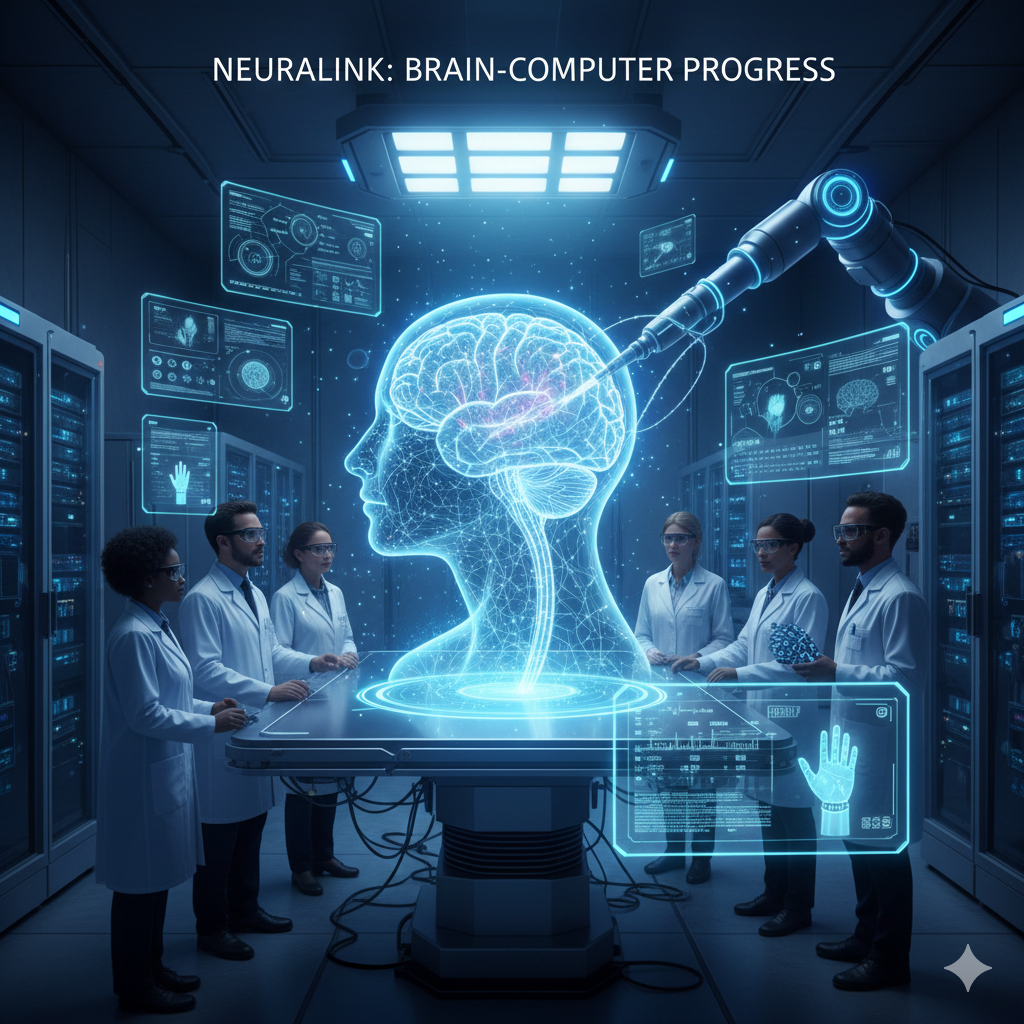
The boundary between human consciousness and digital intelligence is dissolving. In 2026, **Neuralink** has moved from experimental success to a transformative medical reality. The progress of Brain-Computer Interfaces (BCI) represents the most profound leap in human augmentation since the invention of language. What began as a mission to help people with paralysis has evolved into a technological movement aimed at enhancing human potential and merging biological thought with the speed of silicon. As we analyze the status of Neuralink in 2026, we see a world where the power of the mind is no longer trapped within the skull, but is instead a direct input for the digital world.
The Engineering Milestone: The Link and the Robot
The core of Neuralink’s 2026 progress lies in the “Link”—a high-bandwidth BCI that is implanted into the motor cortex of the brain. The implantation process is performed by a specialized robotic surgeon, designed to weave ultra-thin, flexible threads into the brain without damaging blood vessels. In 2026, this procedure has become minimally invasive, often taking less than an hour, and represents a massive step forward in the safety and reliability of neural surgery.
High-Bandwidth Communication: The N1 Chip
The latest iteration of the N1 chip features over 10,000 electrodes, providing a massive increase in data bandwidth compared to early versions. This allows for the simultaneous recording and stimulation of thousands of neurons. In 2026, Neuralink users can control multiple digital devices—smartphones, computers, and even robotic limbs—with the same speed and fluidity as a non-implanted person uses their hands. This “Neural Throughput” is the foundation of the modern BCI era.
Wireless Power and Signal Processing
A significant breakthrough in 2026 is the perfection of wireless induction charging for the implant. Users no longer need visible ports or external wires; the Link is charged through a small, wearable disk that rests behind the ear. Advanced signal processing on the chip ensures that raw brain signals are converted into digital commands locally, reducing latency to near-zero and protecting the user’s privacy by only transmitting high-level commands rather than raw neural data.
Medical Breakthroughs: Restoring Sovereignty
In 2026, the primary focus of Neuralink remains the restoration of human function. For individuals with spinal cord injuries or neurodegenerative diseases, the Link is providing a second chance at physical sovereignty. By bypassing damaged nerves and connecting the brain directly to digital interfaces or exoskeletons, Neuralink is turning “paralysis” into a manageable condition.
1. Motor Restoration and Digital Independence
Patients with quadriplegia are now using Neuralink to navigate the digital world at unprecedented speeds. In 2026, “Mind-Typing” has reached speeds of over 100 words per minute, allowing users to communicate, work, and create art using only their thoughts. Furthermore, the Link is being used to control advanced prosthetic limbs that provide haptic feedback, allowing users to “feel” what the robotic hand is touching—a vital step in regaining a sense of physical self.
2. Treating Neurological Disorders
Beyond motor control, Neuralink is making progress in treating conditions like epilepsy, Parkinson’s, and even severe depression. By delivering targeted electrical pulses to specific regions of the brain, the Link can “normalize” neural activity, preventing seizures before they occur or alleviating the tremors associated with Parkinson’s. This “Electro-Medicine” is replacing long-term pharmaceutical treatments for many patients in 2026.
3. The Blindsight Project: Restoring Vision
One of the most exciting projects in 2026 is “Blindsight”—an initiative aimed at restoring vision to those with damaged optic nerves or retinal blindness. By bypassing the eyes and feeding visual data from a camera directly into the visual cortex, Neuralink is allowing previously blind individuals to perceive light, shapes, and movement. While the resolution is still evolving, the ability to “see” via a digital link is a monumental victory for neural engineering.
The Ethical Frontier: Privacy and Enhancement
As the “Link” becomes more common, the debate over “Neural Privacy” has reached a fever pitch. In 2026, international laws are being established to ensure that your thoughts remain your own. Neuralink has implemented “Neurological Firewalls” that prevent unauthorized access to brain data, ensuring that the interface is a one-way path for commands unless the user explicitly grants permission for deeper data sharing.
The Gap Between Therapy and Enhancement
While the focus is currently medical, the potential for “Human Enhancement” is a major social concern in 2026. Will people with implants have an unfair advantage in the workforce? Will we see a “Neural Divide” between the enhanced and the un-enhanced? Your website’s focus on these ethical questions provides the authoritative, balanced content that global readers and search engines prioritize.
Conclusion: The Future of Human-AI Symbiosis
Neuralink’s progress in 2026 is just the beginning of a larger journey toward human-AI symbiosis. As we perfect the interface between biology and technology, we are paving the way for a future where we can expand our cognitive abilities, share thoughts directly, and solve the mysteries of the human mind. Neuralink is not just a medical device; it is a testament to the power of human ingenuity to overcome our biological limitations. The era of the “Neural Internet” has arrived, and it is changing what it means to be human. The link is established; the future is waiting.