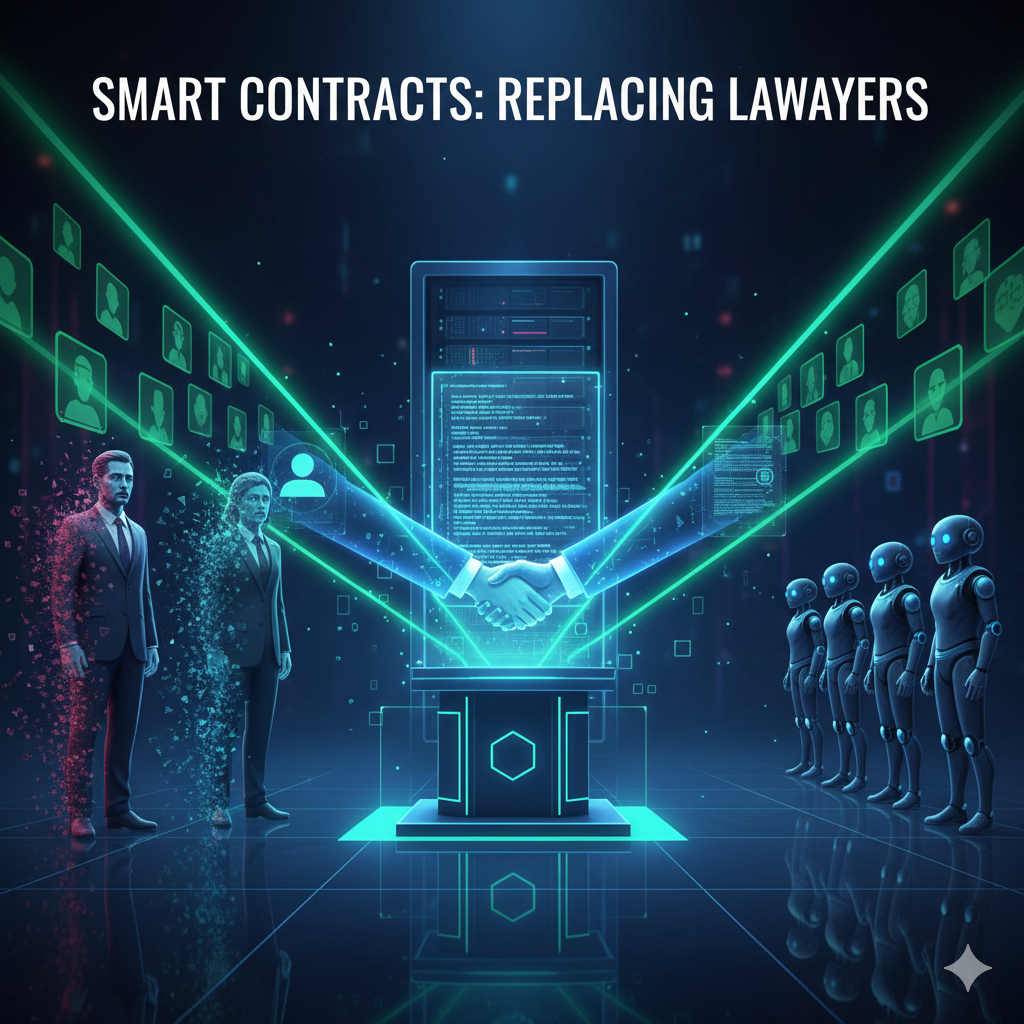

The dawn of 2026 has brought with it a quiet but profound disruption in the world’s oldest profession: the law. For centuries, trust between two parties was facilitated by paper documents, ink signatures, and expensive intermediaries—lawyers. Today, that trust is being decentralized. **Smart Contracts**—self-executing pieces of code hosted on a blockchain—are beginning to replace traditional legal processes. By automating the execution of agreements based on pre-defined conditions, smart contracts are eliminating human error, reducing costs, and ensuring that “Code is Law.” In 2026, from real estate transactions to complex international trade, the world is moving away from the courthouse and toward the ledger. This is not just an efficiency upgrade; it is the death of the middleman.
What are Smart Contracts in 2026?
A smart contract is a digital agreement where the terms of the contract are written directly into lines of code. In 2026, these contracts have evolved beyond simple “if-this-then-that” logic into sophisticated, AI-enhanced neural protocols. Unlike a traditional contract that requires a court to enforce, a smart contract enforces itself. If the conditions are met, the payment is released or the asset is transferred instantly and irreversibly. In a world of 6G speed and global connectivity, waiting weeks for a lawyer to review a document is becoming an obsolete practice.
1. Real Estate Without the Notary
In 2026, buying a house is as simple as scanning a QR code. Through the **Tokenization of Real Estate**, property titles are stored as NFTs on the blockchain. When a buyer sends the agreed-upon amount of stablecoins to a smart contract, the property title is automatically updated and transferred to their wallet. There are no title companies, no escrow agents, and no lengthy closing processes. The smart contract verifies the funds, checks for liens, and executes the swap in seconds, saving buyers and sellers thousands of dollars in legal fees.
Automated Insurance Claims
The insurance industry has been completely transformed. In 2026, smart contracts are linked to real-world data via “Oracles.” For example, if a flight is delayed by more than two hours, a travel insurance smart contract detects the delay via flight data APIs and instantly sends a refund to the passenger’s wallet. There is no claim form to fill out and no adjuster to argue with. The code sees the delay, and the code pays the claim. This “Parametric Insurance” is making protection more transparent and accessible than ever before.
The Technical Engine: Oracles and AI Verification
The biggest advancement in 2026 is the integration of **AI Oracles**. Early smart contracts were “blind”—they didn’t know what was happening in the physical world. Today, decentralized oracles provide the contract with verified data from sensors, satellites, and AI analyzers. If a smart contract is governing an agricultural deal, it uses satellite data to verify a crop harvest before releasing payment to the farmer. This bridge between the physical and digital worlds is what has allowed smart contracts to scale across all industries.
2. Decentralized Autonomous Organizations (DAOs)
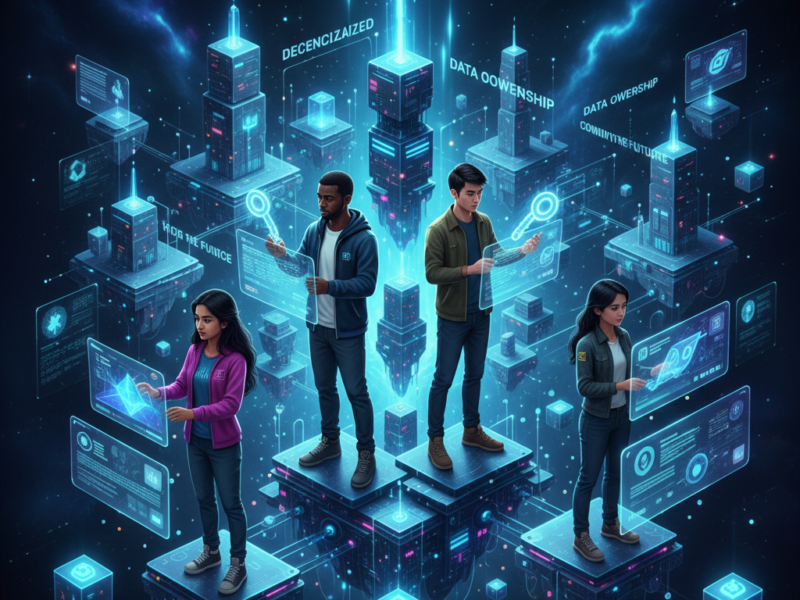
Companies are now being run entirely by smart contracts. In 2026, **DAOs** have no board of directors. Instead, the company’s bylaws are written in code. Voting, hiring, and budget allocations are all handled by smart contracts based on token-holder votes. This eliminates corporate politics and ensures that every action taken by the organization is transparent and recorded on the blockchain. For many startups in 2026, the first “employee” they hire is actually a suite of smart contracts.
3. Intellectual Property and Royalty Automation
For artists and creators, smart contracts have ended the era of exploitative contracts. In 2026, when a song is streamed or a digital artwork is sold, the smart contract automatically splits the payment and sends it directly to the artist, the producer, and the writer in real-time. There are no record labels or agents holding onto the money for months. The creator owns their work, and the code ensures they are paid for every single use of it.
Will Lawyers Disappear Entirely?
While smart contracts are replacing the “mechanics” of the law, the role of the lawyer in 2026 is shifting toward **Code Auditing**. The most successful legal firms today are those that employ “Legal Engineers”—specialists who can both understand the law and write secure blockchain code. We are not seeing the end of the legal profession, but rather its total transformation into a technical discipline. In 2026, the best lawyer is the one who can write a contract that never needs to go to court.
Conclusion: The Era of Programmable Trust
Smart contracts are the backbone of the new global economy. By removing the friction, cost, and bias of traditional legal systems, they are allowing humanity to collaborate at a scale never before seen. In 2026, we have finally moved from a world of “Don’t be evil” to a world of “Can’t be evil,” where the code ensures that every agreement is honored exactly as written. The future of the law is decentralized, it is automated, and it is smart. Welcome to the era of programmable trust.