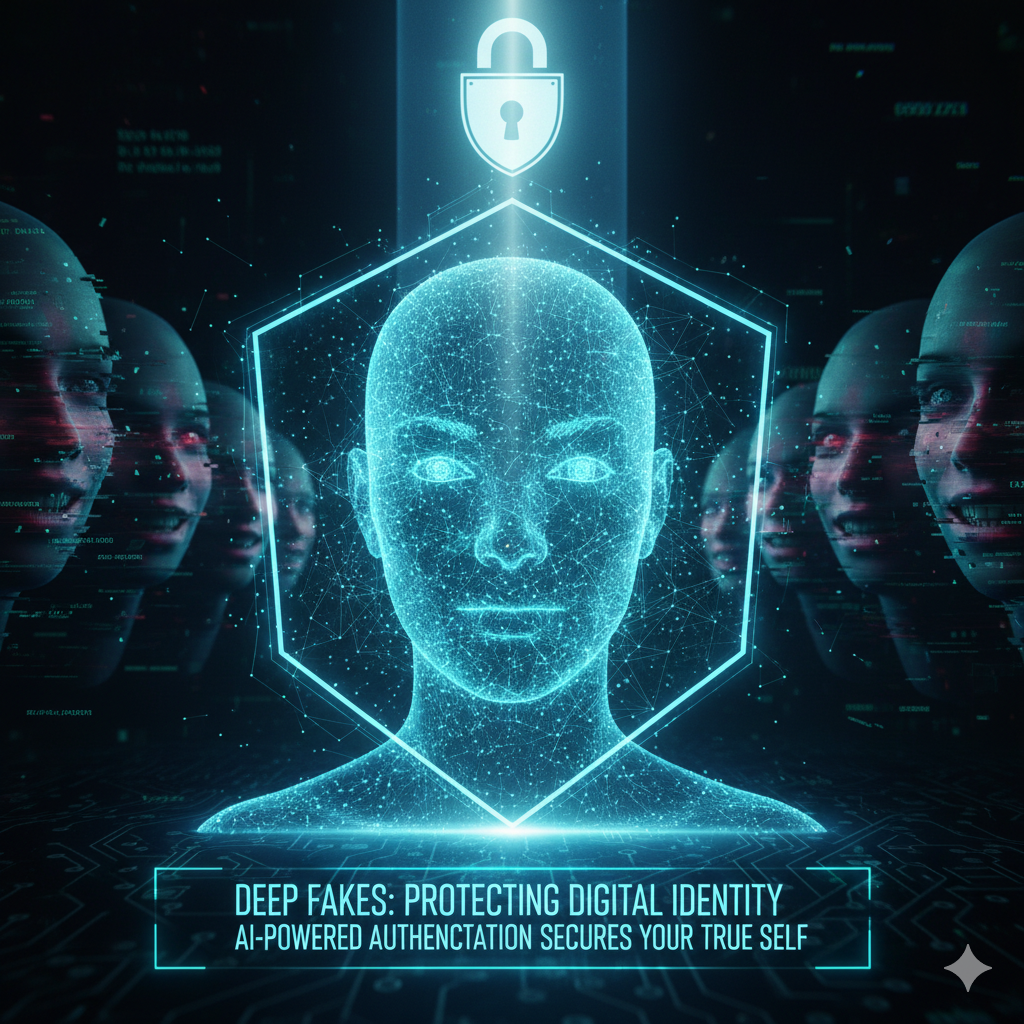

In 2026, the concept of “seeing is believing” has been permanently shattered. The rapid advancement of Generative AI has given rise to a hyper-realistic world of **Deepfakes**, where video and audio can be perfectly synthesized to mimic any individual on Earth. This technological evolution has placed our **Digital Identity** at severe risk. From financial fraud to corporate espionage and political manipulation, deepfakes have become the primary weapon of digital-age predators. Protecting your identity is no longer just about strong passwords; it is about establishing a “Verifiable Truth” in a sea of synthetic misinformation. In 2026, we are witnessing a massive shift toward cryptographic signatures, biological watermarking, and AI-driven detection systems designed to guard the essence of who we are in the digital realm. The battle for digital sovereignty has officially begun.
The Deepfake Crisis of 2026
The 2026 deepfake is not the glitchy, unstable video of the early 2020s. Today, AI models can simulate micro-expressions, heartbeat-driven skin color changes, and unique vocal tremors with 99.9% accuracy. This “Hyper-Realism” makes it nearly impossible for the human eye or ear to distinguish between a real person and a computer-generated likeness. This crisis has forced a total re-evaluation of how we authenticate our identity during video calls, bank transfers, and public announcements. The erosion of trust is the greatest challenge of the 2026 information age.
1. Cryptographic Identity Signatures
In response to the deepfake threat, the most critical protection in 2026 is the adoption of **Cryptographic Identity Signatures**. Think of this as a digital “blue checkmark” for your soul. Every video or audio stream you produce is signed at the hardware level with a private key. When someone watches your content, their device verifies the signature against a public ledger (often blockchain-based). If the content has been altered by AI, the signature breaks, and the viewer is instantly warned that the media is unverified. In 2026, un-signed content is treated with extreme suspicion, much like an unverified email from an unknown sender.
Biological Watermarking: The Body’s Digital Seal
Another breakthrough in 2026 is **Biological Watermarking**. Modern cameras and smartphones now embed subtle metadata derived from the user’s real-time biometrics—such as pulse rate or retina patterns—into the video file. Since deepfakes are generated by AI, they lack these consistent biological markers. Detection algorithms can now scan for these “Bio-Signals” to confirm that the person on the screen is a living, breathing human being rather than a digital puppet.
Practical Steps for Personal Protection
While high-tech solutions are evolving, individual vigilance remains the first line of defense in 2026. Experts recommend several key strategies to harden your digital presence against deepfake attacks.
2. “Zero Trust” Communication Protocols
In 2026, professional and high-stakes personal communications have adopted a **Zero Trust** model. If a family member or a CEO calls asking for sensitive information or a financial transfer, the standard protocol is to “Challenge and Verify.” This often involves using an out-of-band communication channel (like a physical smart ring token or a pre-shared secret phrase) that an AI hacker would not possess. In 2026, the most secure password is a shared memory that has never been recorded digitally.
3. AI Detection Sentinels
Just as we use antivirus software for files, in 2026, we use **AI Detection Sentinels** for our communication apps. These real-time guardrails run in the background of video calls, analyzing the stream for technical artifacts that are invisible to humans—such as unnatural light reflections or frequency anomalies in the audio. If the sentinel detects more than a 10% probability of synthesis, it places a red “Potential Deepfake” banner across the screen, allowing the user to end the call before damage is done.
The Role of Legislation and Platforms
In 2026, global governments have passed the “Digital Integrity Act,” which mandates that all AI-generated content must be labeled as such at the metadata level. Social media platforms are now legally responsible for removing un-labeled deepfakes within minutes of detection. While these laws are helpful, the decentralized nature of the internet means that personal responsibility and technological shields are still the most effective ways to protect your digital identity.
Conclusion: Reclaiming Digital Truth
Deepfakes represent a fundamental challenge to the fabric of human society, but they are also driving a new era of secure, verifiable communication. By embracing cryptographic tools, biological verification, and a skeptical mindset, we can reclaim our digital truth in 2026. Your identity is your most valuable asset; in an world of shadows and simulations, protecting that identity is not just a technical task—it is an act of preserving your humanity. As we move forward, the tools of defense will continue to outpace the tools of deception, ensuring that while AI can mimic our face, it can never steal our verifiable truth.