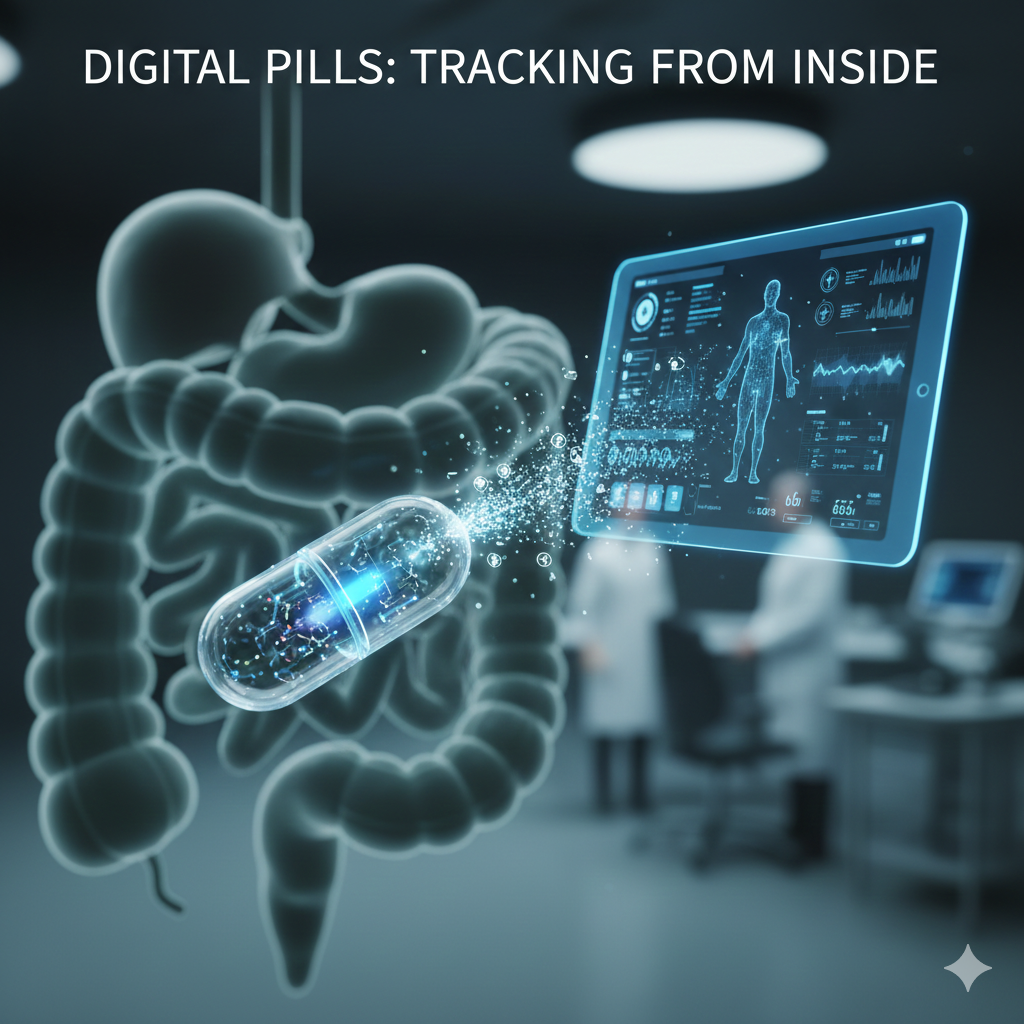

By early 2026, the traditional medical check-up is undergoing a radical transformation. We have moved from wearable devices on our wrists to “Ingestible Devices” inside our bodies. **Digital Pills** have officially entered the mainstream of personalized medicine, offering a window into the human body that was previously impossible. These are not ordinary medications; they are sophisticated silicon-based sensors encapsulated in a digestible shell. Once swallowed, they track medication adherence, monitor internal chemical changes, and relay vital data to a smartphone or a doctor’s dashboard. In 2026, healthcare is no longer about reactive treatment; it is about proactive, internal data-driven wellness. This technology is effectively turning the human body into an “Internet of Things” (IoT) node, where every biological signal is tracked from the inside out.
The Science Behind the Swallow
The core of the 2026 digital pill is the **Ingestible Event Marker (IEM)**. This tiny, battery-free sensor is activated by the stomach’s natural acids. It uses the body’s own electrolytes as a power source to transmit a unique signal to a wearable patch or a mobile device. This “Stomach-Powered Communication” is a marvel of bio-electronics, ensuring that the device remains functional throughout its journey through the digestive tract without the need for toxic chemicals or heavy metals.
1. Medication Adherence: The End of Forgotten Doses
In 2026, the biggest challenge in chronic disease management—medication adherence—has been solved. Digital pills for conditions like hypertension, diabetes, and mental health track exactly when a dose is taken. If a patient forgets their medication, their personal AI assistant or healthcare provider receives an instant alert. This real-time tracking is saving millions of lives by ensuring that complex treatment protocols are followed with 100% precision, reducing hospital readmissions and the waste of expensive pharmaceuticals.
Real-Time Internal Biochemistry Monitoring
Beyond adherence, 2026’s second-generation digital pills are capable of monitoring gas levels, pH balance, and core temperature from within the gut. These sensors can detect the early signs of internal inflammation, gastrointestinal bleeding, or changes in the microbiome before physical symptoms even appear. For patients with Crohn’s disease or IBS, this “Internal Surveillance” provides a level of freedom and security that was previously unimaginable.
Breaking Down the 2026 Technological Advancements
The progress of digital pills in 2026 is driven by three major technological leaps: **Bio-Compatible Power, AI Data Synthesis, and Secure Neural Relays.** These advancements have addressed the safety and privacy concerns that slowed the technology’s initial rollout.
2. Personalized Nutrient Delivery
In 2026, digital pills are being used for “Precision Nutrition.” These ingestible sensors analyze the user’s current blood-sugar levels and nutrient deficiencies from inside the stomach. Based on this data, the pill can release micro-doses of specific vitamins or minerals at the exact moment the body is best prepared to absorb them. This is the era of the “Smart Vitamin,” where your supplement routine is as unique as your DNA.
3. Diagnostic Imaging: The Camera in a Capsule
Traditional endoscopies are becoming a thing of the past. In 2026, patients swallow a “Camera Pill” equipped with ultra-high-definition sensors and 6G connectivity. As the pill travels through the digestive system, it streams high-resolution video directly to the doctor’s spatial computing headset. The AI analyzes thousands of frames per second, flagging potential polyps or abnormalities with higher accuracy than a human eye could ever achieve.
Ethical and Privacy Considerations
The ability to track a person from the inside raises profound privacy questions in 2026. Who owns the data generated by your stomach? Modern digital pills utilize **Bio-Encryption**, ensuring that the data transmitted by the sensor can only be decrypted by the user’s authorized health keys. In 2026, the focus is on “Data Sovereignty,” where the patient has absolute control over who sees their internal biological signals, protecting them from insurance discrimination or corporate data mining.
Conclusion: The Future of Internal Intelligence
Digital pills are not just a medical trend; they are a fundamental shift in the human-machine relationship. By placing intelligence inside our bodies, we are gaining the power to prevent disease before it starts and optimize our health in real-time. As we move forward into 2026 and beyond, the line between “medicine” and “technology” will continue to blur until every pill we take is a smart partner in our journey toward longevity. The future of healthcare is internal, it is intelligent, and it is here. Welcome to the era of the digital body.