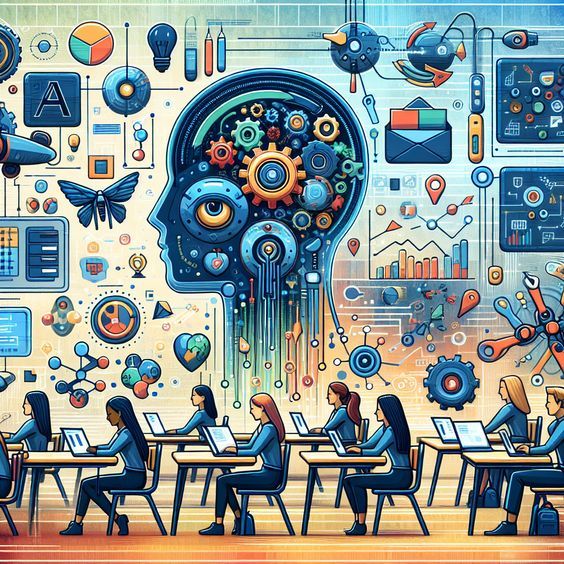
Digital Ethics: Guardian of Human Values in the Technological Age
Introduction
Digital ethics has emerged as the guardian of human values in today’s fast-paced technological era. It is not merely a barrier, but a guiding principle that ensures innovation remains at the heart of human well-being. As artificial intelligence, data science, and other advanced technologies become part of our daily lives, considering ethical aspects has become extremely crucial. The fundamental goal of digital ethics is to establish a balance where human rights, privacy, and social justice are not compromised in the race for development. This concept compels us to consider how technology is affecting human society and how we can use it to build a better future. Digital ethics actually serves as a bridge between human values and technological progress, ensuring that our inventions do not outpace our ethics.
The Interrelationship Between Innovation and Ethics
The relationship between innovation and ethics is a complex and deep connection that is determining the foundation of our technological future. In the modern era, the rapid development of technology has not only made our lives easier but has also raised numerous ethical questions. With every new invention, we have to think: Is what we are doing right? Is it beneficial for human society? Will it not have negative effects? These questions form the basis of digital ethics. For example, when social media platforms were being created, initially not much attention was paid to the effects on users’ mental health. The result is that today we see that social media addiction has badly affected the mental health of the younger generation. Similarly, the ongoing race in the field of artificial intelligence has raised many ethical questions. When we create AI systems that can make decisions autonomously, we have to think about who bears the responsibility for these decisions. If an autonomous vehicle gets into an accident, who will be responsible? The driver? The car manufacturing company? Or the AI system developer? These are the questions whose answers are being sought in digital ethics. The relationship between innovation and ethics is actually incomplete without each other. Without ethics, innovation becomes merely an uncontrollable force, while without innovation, ethics falls behind in the race for development. Only the right balance of both can lead us to a better future.
Personal Data Protection and Privacy
Personal data protection is an extremely important aspect of digital ethics. In today’s era, our personal data has become part of our existence. Every type of information about us – our friends, our likes and dislikes, our habits, our financial matters – all are being stored in digital form. The problem is who has this data, how it is being used, and for what purpose it is being used. Many companies collect users’ data without their permission and use it for commercial purposes. Sometimes this data falls into the hands of hackers, resulting in significant losses for users. Digital ethics demands that every person have complete control over their personal data. This means that no person’s data should be used without their permission. Strong encryption methods should be used for data protection. Users should have the right to withdraw or delete their data at any time. The concept that data is a human right and not just a commercial commodity is the fundamental spirit of digital ethics.
Artificial Intelligence and Ethical Challenges
Artificial intelligence has presented us with ethical questions that we have never faced before. AI systems are now participating in our daily life decisions – giving us jobs, providing bank loans, and even recommending medical treatments. The problem is how do these systems make decisions? Are their decisions fair? Do they contain bias? For example, if an AI system is selecting job candidates, and it is only preferring candidates of a specific race or gender, then this is clear bias. Similarly, medical diagnosis AI systems, if trained only on data from patients of a specific class, will not be able to correctly diagnose patients from other classes. Digital ethics demands that AI systems be transparent, their decisions understandable, and free from all types of bias. AI developers will have to take the responsibility to develop systems that are fair and trustworthy.
Digital Mental Health and Technological Effects
Technology has had deep effects on our mental health. The constant presence of smartphones and social media has shortened our attention spans, affected our sleep quality, and weakened our social skills. Many technology companies work on the “attention economy” – they want us to spend maximum time on their platforms. For this purpose, they use dopamine principles, constantly giving us new notifications and updates so that we remain hooked to their platforms. Digital ethics demands that we reconsider technology design. The purpose of innovation should not be to force users to spend more and more time, but to enhance their well-being. This means developing products that empower users, provide them useful information, and promote healthy relationships with them. Digital well-being features, such as screen time trackers and break reminders, are the result of this ethical thinking.
Cybersecurity and Human Protection
Cybersecurity is no longer just a technical problem, but has become an ethical necessity. As our lives become increasingly digital, the importance of protecting our digital existence is also growing. Hacking, data breaches, and ransomware attacks not only cause financial losses but can also threaten human safety. For example, if a hospital’s system is hacked, patients’ lives could be endangered. Similarly, if a city’s infrastructure is hacked, the entire city’s life could be paralyzed. Digital ethics demands that we give cybersecurity top priority. Technology developers must ensure that their products are secure. Users should be educated about basic cybersecurity principles. Governments should make effective laws against cybercrime.
Sustainable Technology and Environmental Protection
The environmental impact of technology development is an important aspect of digital ethics. Data centers are major consumers of electricity worldwide, and their carbon footprint is continuously growing. The mountain of electronic waste is increasing every year, containing heavy metals and toxic materials that are polluting the environment. The exploitation of natural resources used in technology production is also a major ethical issue. Digital ethics demands that we make sustainability the center of every stage of innovation. This means developing algorithms that improve energy efficiency, building data centers powered by renewable energy, and designing products according to circular economy principles that can be repaired, upgraded, and recycled. An ethical technological future is one that is not only digitally informed but also environmentally responsible.
Digital Divide and Social Justice
Technology development has deepened existing social and economic divisions. While rich countries and classes benefit from new technologies, the world’s poor and backward areas fall behind as victims of the digital divide. Differences in internet access, availability of digital devices, and digital literacy have created a deep gap between different classes of society. Digital ethics demands that we work to eliminate the digital divide. This means designing technology in a way that meets the needs of all users, including people with disabilities, elderly populations, and low-resource communities. The goal of technology development should not be only to create the latest smartphones, but to develop solutions that can solve the specific problems of the developing world.
Autonomy and Digital Consent
Modern technology designs often violate human autonomy. Data-based manipulation, dark patterns, and addictive designs affect users’ free will. Digital ethics demands that we give human autonomy central importance in technology design. Users should have the authority to make decisions with complete information, and they should have complete control over the use of technology. The principle of informed consent is an important pillar of digital ethics. This means that users should clearly understand what they are consenting to, and they should have equal authority to say “no” without any penalty.
Education and Digital Ethics
Promoting digital ethics requires fundamental changes in the education system. It is essential to equip technology students and professionals with ethics education so that they can automatically include ethical aspects in the innovation process. Including ethics as a compulsory subject in engineering, computer science, and data science curricula is an important means of promoting digital ethics. The concept that every technical professional works with ethical responsibility is the key to the success of digital ethics. Educational institutions should develop critical thinking, ethical reasoning, and a sense of social responsibility in students.
Business Ethics and Technology Industry
Business models in the technology industry often transcend ethics. The use of user data, the race for profit, and the pressure to gain market dominance have pushed ethical aspects into the background. Digital ethics demands that business organizations include not only profit but also social welfare in their core objectives. Transparent business practices, ethical product design, and social responsibility are among those principles of digital ethics that can lead the technology industry in a positive direction. Companies should review the social and ethical impacts of their decisions and respect users’ rights.
International Cooperation and Digital Governance
The scope of digital ethics transcends national borders. Differences in data flows, technology standards, and ethical principles between different countries have highlighted the need for international cooperation. The formation of a globally agreed digital ethics framework, building international laws, and dialogue between different cultures are essential for promoting digital ethics. The concept that ethical principles of technology are recognized at the global level is necessary for the success of digital ethics. International organizations, governments, and civil society will have to work together to establish global standards for digital ethics.
Future Technologies and Ethical Preparation
Future technologies such as quantum computing, neural interfaces, and general AI will present new ethical challenges before us. The digital ethics framework should be flexible enough to evolve with new technologies. Preemptive strategies, risk analysis, and ethical impact assessment are among those methods of digital ethics that can prepare us for future challenges. We should start considering the potential ethical impacts of these technologies today, so that we can reduce their negative effects when they are introduced.
Implementation of Ethical Design Principles
To give practical shape to digital ethics, it is necessary to include ethical principles at the design stage itself. The concept of “ethics by design” ensures that ethical aspects are considered at every stage of product development. Designing from the user’s perspective, giving centrality to transparency, and pre-reviewing potential harms of products are among those practical aspects of digital ethics that can lead innovation in a positive direction. Designers and developers should think about the potential misuse of their products and take measures to reduce their negative effects.
Continuous Assessment and Improvement Process
Digital ethics is not a static thing but a continuous process. Along with the evolution of technologies, it is essential to continuously review and improve the ethical framework. Regular audits, stakeholder feedback, and adapting to social changes are among those measures of digital ethics that make it effective. Companies and institutions should continuously review the ethical impacts of their products and change their practices when necessary.
Individual and Collective Responsibility
The success of digital ethics depends on individual and collective responsibility. Every individual, institution, and society can play its role in promoting digital ethics. Protecting personal data, choosing ethical products, and working for social welfare are among those practical aspects of digital ethics that every person can adopt. We should consider ethics in our daily digital actions and encourage others to do the same.
Journey Towards an Ethical Future
Digital ethics is leading us towards a future where the relationship between technology and humanity is harmonious. This journey is not easy, but it is extremely necessary. Taking ethics into consideration at every step, we can build a digital civilization that is not only modern but also rich in human values. We should support each other in this journey and together build a better digital future. This is the ultimate goal of digital ethics – a world where technology works for human welfare.