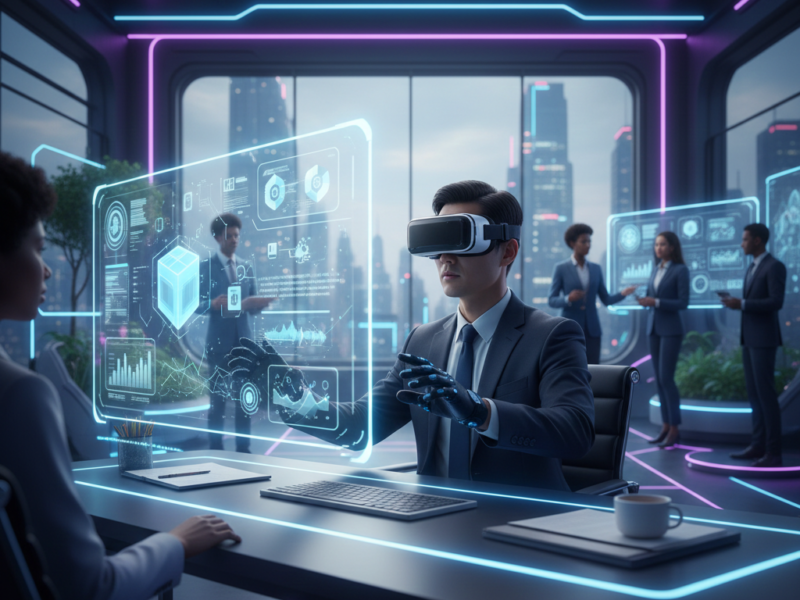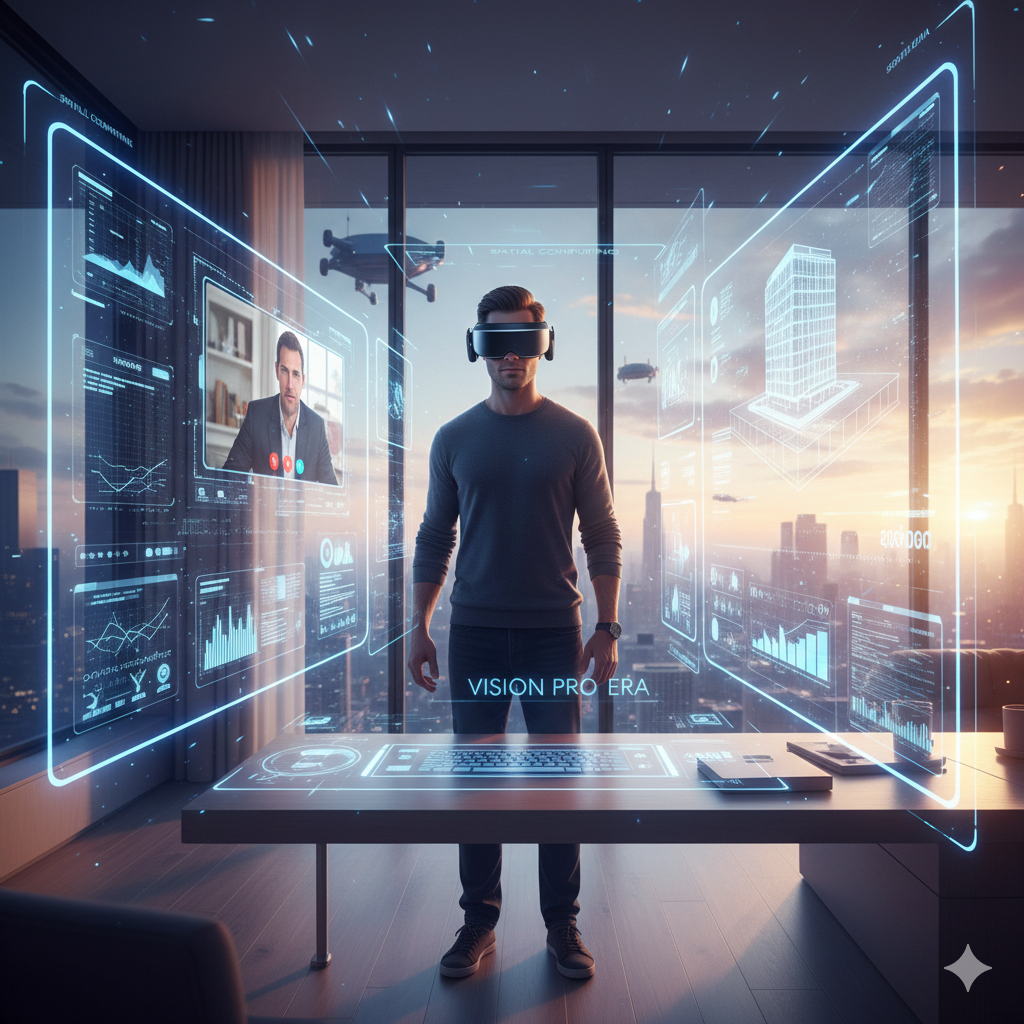
The dawn of 2026 has officially ushered in the most significant change in human-computer interaction since the introduction of the Macintosh in 1984. We have moved beyond the “Personal Computing” era of laptops and the “Mobile Computing” era of smartphones into the **Spatial Computing** era. At the heart of this revolution is the maturation of the Vision Pro and its competitors. Spatial Computing is not just about wearing a headset; it is about the seamless blending of digital content into our physical world. The world is no longer a background for our devices; in 2026, the world *is* the desktop, and our eyes, hands, and voice have become the ultimate input devices.
Defining Spatial Computing in 2026
Spatial computing refers to a form of computing that uses the space around us as a canvas. Unlike Virtual Reality (VR), which cuts you off from the world, Spatial Computing uses Mixed Reality (MR) to anchor digital windows and 3D objects into your actual room. Whether it is a giant movie screen floating in your living room or a complex 3D engineering model sitting on your coffee table, these digital entities respond to light and cast shadows, making them feel physically present. In the **Vision Pro Era**, technology is no longer a separate screen we look at; it is an environment we live in.
The Power of Eye and Gesture Control
The defining characteristic of this era is the disappearance of physical peripherals. In 2026, the mouse and keyboard are becoming legacy devices. Spatial Computing relies on high-speed eye-tracking and sophisticated hand-gesture recognition. By simply looking at an icon and tapping your fingers together, you can open apps, scroll through documents, and manipulate 3D space. This “Intention-Based Interface” is so intuitive that it removes the learning curve associated with traditional software, making high-level computing accessible to everyone from children to the elderly.
3.0 Surround Persona and Social Interaction
One of the biggest breakthroughs of the Vision Pro Era is the evolution of digital “Personas.” In 2026, video calls are no longer flat 2D squares on a screen. Through spatial capture, your colleagues appear as life-sized, high-fidelity 3D avatars in your room. They have depth, maintain eye contact, and their voices come from their specific position in space thanks to **Spatial Audio**. This “Presence Technology” is solving the digital isolation problem, making remote work feel as collaborative and human as being in the same office.
The Impact on Professional Industries
While entertainment is the gateway, the real power of the Vision Pro Era is being felt in professional sectors. In 2026, spatial computing is the standard for architecture, medicine, and engineering. Architects no longer show 2D blueprints; they walk their clients through a full-scale digital twin of a building before a single brick is laid. Surgeons are using spatial overlays during operations to see internal scans projected directly onto the patient, increasing precision and saving lives.
The Infinite Workspace: The End of the Monitor
For the knowledge worker, the “Infinite Canvas” has replaced the multi-monitor setup. In 2026, you can have twenty floating windows arranged around your room—a browser here, a spreadsheet there, and a 3D project management board on the wall. This freedom from physical screens is increasing productivity by allowing for better organization of information and reducing the cognitive load caused by toggling between tabs on a small laptop display.
Education and Spatial Learning
Learning has undergone a radical shift. Instead of reading about the solar system in a textbook, students in 2026 can pull a life-sized planet into their classroom, walk around it, and see the rings of Saturn in high definition. Spatial computing makes learning experiential rather than just theoretical, leading to higher retention rates and a deeper understanding of complex scientific and historical subjects.
Technological Hurdles and Future Roadmaps
Despite its success, the Vision Pro Era still faces challenges. In 2026, the industry is focused on three key areas: Battery Longevity, Weight Reduction, and Social Acceptance. The current goal for 2028 is “Smart Glasses” that offer full spatial computing power in a form factor no larger than a standard pair of Ray-Bans. The transition from headsets to glasses will be the final step in making spatial computing a universal standard.
Privacy in a Spatial World
As spatial devices use cameras to map our homes and track our eyes, privacy is a major concern. Leading manufacturers have implemented “Optic ID” and on-device processing to ensure that eye-tracking data never leaves the device. In 2026, your “Spatial Map” (the 3D layout of your home) is encrypted and stored locally, protecting users from the data-mining practices that defined the social media era. This focus on privacy is the backbone of the trust required for mass adoption.
Conclusion: Living in a Blended Reality
The Vision Pro Era is not just a trend; it is the natural evolution of how humans interact with information. By bringing the digital world into our physical space, we have made technology more natural, more powerful, and more human. As we look forward to the rest of the decade, the line between “online” and “offline” will continue to blur until it disappears entirely. Spatial computing is the ultimate realization of the digital dream—a world where the only limit to what you can see and do is your own imagination. Welcome to the era of the infinite canvas. Welcome to the future of computing.