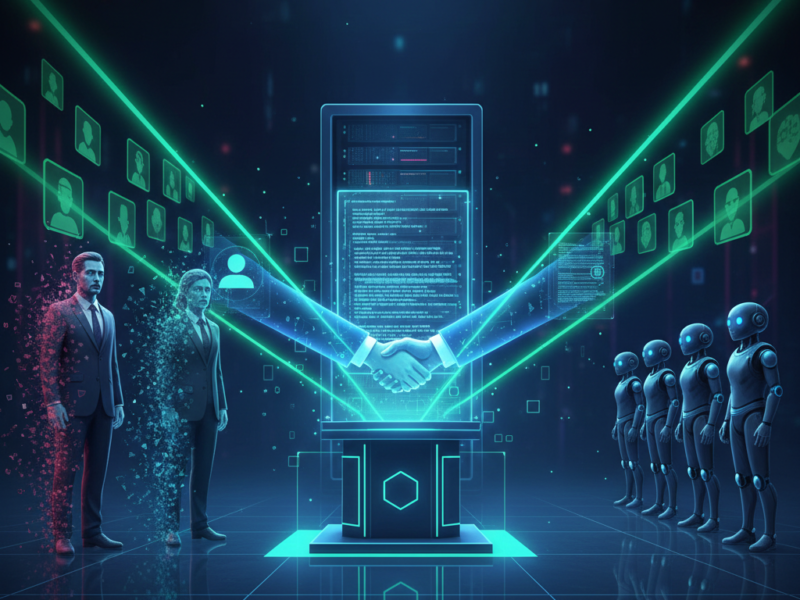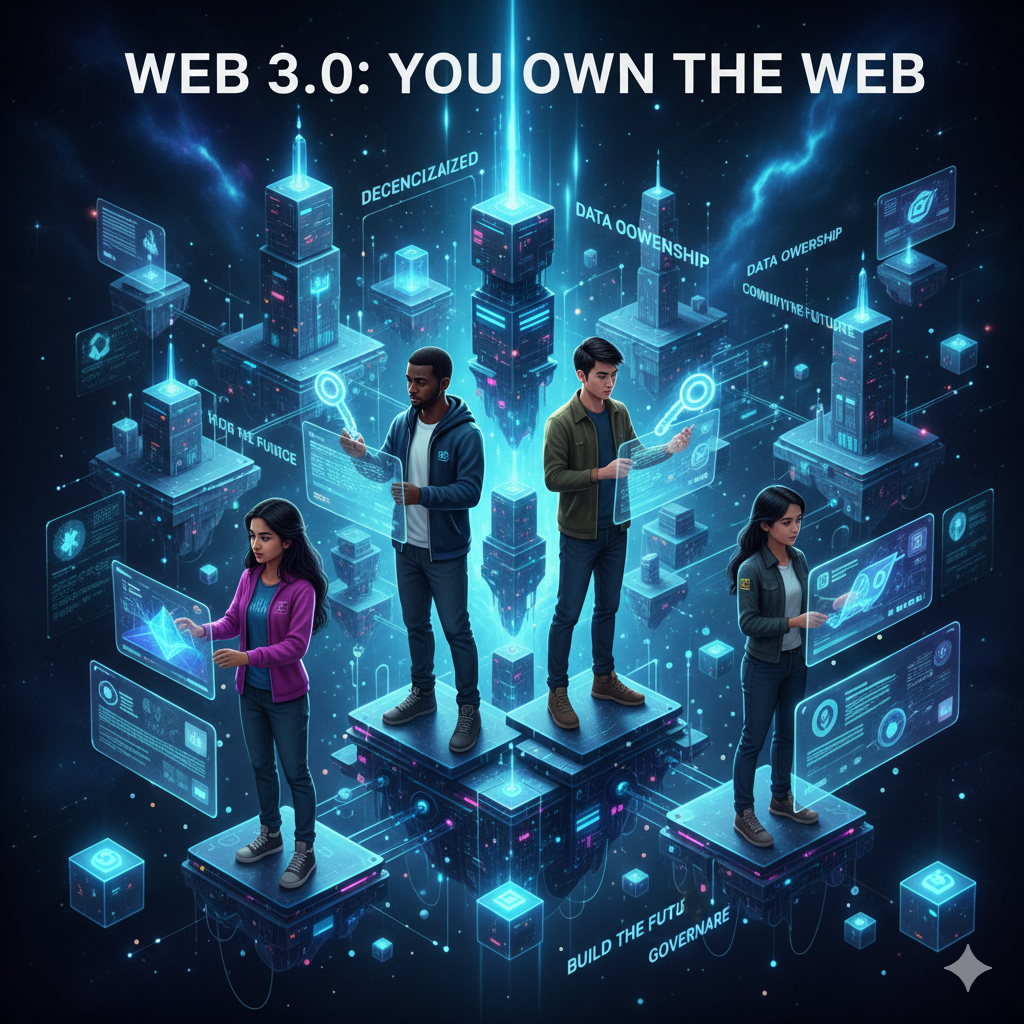
The year 2026 marks the end of the “Data Colonialism” era. For nearly two decades, the internet was governed by a handful of centralized gatekeepers who treated user data as a product to be harvested and sold. Today, the rise of **Web 3.0** has fundamentally flipped this script. Web 3.0 is the decentralized internet, built on blockchain technology, where users no longer just consume or create content—they own it. In this new digital frontier, your identity, your assets, and your data are in your control, protected by cryptography and a peer-to-peer network that no single corporation can shut down. The message of 2026 is clear: The web belongs to you.
The Evolution: From Read-Only to Ownership
To understand the significance of Web 3.0, we must look at the road that led us here. Web 1.0 was “Read-Only”—a digital library where we simply consumed information. Web 2.0 was “Read-Write”—the era of social media where we created content but gave up our privacy to centralized platforms. Web 3.0 is “Read-Write-Own.” In 2026, the middleman has been replaced by the “Smart Contract.” Whether you are posting a photo, selling a house, or streaming music, the transaction happens directly between you and your audience, with the value flowing back to the creator rather than the platform.
1. Decentralized Identity (DID) and Sovereignty
In the Web 2.0 era, your digital identity was owned by big tech companies. If they deleted your account, you lost your digital life. In 2026, Web 3.0 utilizes **Decentralized Identifiers (DIDs)**. You carry a single, sovereign digital wallet that serves as your passport across the entire internet. You don’t “log in” to a site; you connect your wallet. You decide exactly what data to share—your age, your credentials, or your social graph—and you can revoke that access at any moment. This is the foundation of digital freedom.
The End of Third-Party Cookies
With Web 3.0, the intrusive tracking of third-party cookies is becoming obsolete. Instead of advertisers tracking you across the web, you can choose to “Opt-In” to share your preferences in exchange for direct rewards. This “Zero-Knowledge” advertising model ensures that your personal information is never exposed, while you receive the economic benefit of your attention. In 2026, privacy is not just a setting; it is an asset.
The Technological Engines of 2026
The transition to Web 3.0 was made possible by three major technological breakthroughs that addressed the “Blockchain Trilemma” of security, scalability, and decentralization. In 2026, the decentralized web is as fast and user-friendly as the centralized one once was.
Layer 2 Solutions and Scalability
Early blockchains were slow and expensive. In 2026, the integration of **Layer 2 (L2) Rollups** and sidechains has reduced transaction fees to near-zero and increased speeds to thousands of transactions per second. This scalability has allowed for the rise of “Decentralized Social Media” and “Micro-Transactions,” where users can tip creators fractions of a cent instantly without a bank taking a cut.
Interoperability: The Borderless Web
One of the biggest frustrations of the past was that digital assets were trapped within specific apps. In 2026, Web 3.0 is fully interoperable. A digital skin you buy in a game, a badge you earn in a course, or a house you own in the metaverse can be moved across different platforms seamlessly. This “Fluid Ecosystem” is creating a massive, interconnected digital economy that functions as a single, global marketplace.
DAOs: The New Way to Work
Web 3.0 has also redefined how we organize. **Decentralized Autonomous Organizations (DAOs)** are companies without CEOs or traditional hierarchies. They are governed by code and by the collective vote of their token holders. In 2026, DAOs are managing billions of dollars in assets, funding scientific research, and building open-source software, proving that humans can collaborate effectively across borders without a central authority.
Economic Empowerment and the Creator Economy
In 2026, the “Creator Economy” has matured into a multi-trillion dollar industry. Creators no longer rely on ad-revenue shares that favor the platform. Through NFTs (Non-Fungible Tokens) and social tokens, artists, writers, and musicians can build direct economic relationships with their fans. They can sell digital collectibles that grant access to exclusive content or give fans a share in their future earnings. This “Direct-to-Fan” model is lifting millions of creators out of the gig economy and into sustainable, self-owned careers.
DeFi: Banking for the Unbanked
Decentralized Finance (DeFi) is providing financial services to billions who were previously ignored by traditional banks. In 2026, anyone with a smartphone can lend, borrow, and earn interest on their assets through transparent, code-governed protocols. This is reducing the cost of global remittances and fostering economic growth in developing nations, making Web 3.0 a powerful tool for global financial inclusion.
Conclusion: Navigating the Decentralized Horizon
Web 3.0 is not just a technological upgrade; it is a movement to reclaim the original promise of the internet—a free, open, and decentralized space for all. As we move forward into 2026 and beyond, the focus will be on making these tools invisible and intuitive, so that “decentralization” becomes the background standard for every digital interaction. By owning your data, your identity, and your assets, you are no longer a passenger in the digital age; you are the captain. The future of the web is decentralized, it is secure, and most importantly, it is yours. Welcome to the era of ownership.