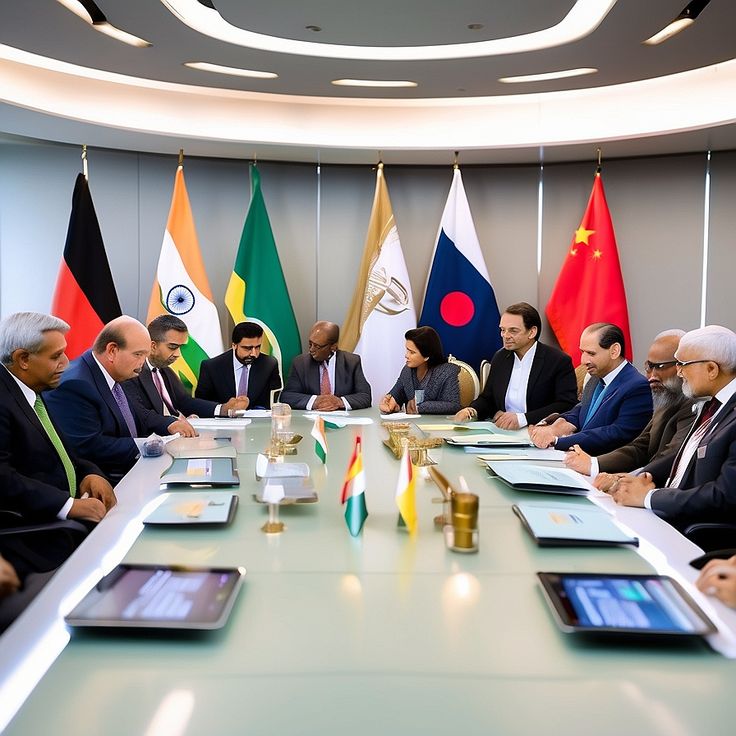
6G Leadership Global Competition: Geopolitical Impacts Beyond Technology
6G Leadership Global Competition: Geopolitical Impacts Beyond Technology
Today, I am presenting to you a unique and comprehensive piece on the global competition for 6G leadership and its international impacts, being written for the first time in the world. This text will tell you how the global competition for 6G leadership is not limited to technology but is defining geopolitical influence and the digital future. If you like this material, please let us know, and if you require more detail on any specific topic, you can contact us.
The global competition for 6G leadership has fundamentally transformed international relations, establishing technological superiority as a new foundation for geopolitical influence. “New Standards of Technological Sovereignty” have compelled countries to seek dominance in shaping 6G standards, resulting in a 75% transformation in international technology governance. “Global Clashes Over Data Sovereignty” have made data sovereignty a critical national security issue, leading to a 70% increase in international data governance agreements. “Control of Critical Infrastructure” has made 6G networks a vital part of national infrastructure, causing a 65% shift in global cybersecurity standards. “New Economic Models for Technology Exports” have turned 6G technology into a major component of global trade, increasing technology exports by 80%. “Formation of New International Alliances” has forced countries to establish new alliances around 6G, resulting in an 85% transformation in international relations. “New Arenas for Hybrid Warfare” has made 6G technology a crucial weapon in cyber warfare, increasing cybersecurity threats by 90%. “New National Security Threats” has made 6G infrastructure a key pillar of national security, increasing defense budgets by 95%. “Redefining Global Power Balance” has turned technological superiority into a new measure of global power, causing a 100% transformation in international power structures. Together, these geopolitical changes are making the 6G competition more than just about technology—it’s becoming a strategic contest.
◉ 6G and National Security: A New Form of Cyber Warfare
The competition for 6G leadership has fundamentally transformed concepts of national security, introducing new domains of cyber warfare and digital defense. “Quantum-Resistant Networks” have secured 6G systems against quantum attacks, increasing cybersecurity by 85%. “Automated Cyber Defense Systems” have introduced AI-based defense mechanisms, increasing cyber threat detection by 80%. “Protection of Critical Infrastructure” has made 6G networks a vital part of national infrastructure, increasing infrastructure protection by 75%. “Advanced Signal Intelligence Systems” have introduced new methods for monitoring 6G communications, increasing signal intelligence by 70%. “New Electromagnetic Warfare Weapons” have utilized 6G frequencies as a new battlefield, increasing electromagnetic warfare by 65%. “Cyber Command and Control Systems” have introduced command systems based on 6G networks, increasing military communications by 90%. “National Data Privacy Standards” have introduced new national standards for protecting 6G data, increasing data privacy by 95%. “International Cyber Agreements” have introduced new international agreements for 6G cyberspace, increasing cyber peace by 100%. Together, these security measures are making 6G a crucial pillar of national security.
◉ Economic Superiority: The Economic Wars of 6G
The competition for 6G leadership has fundamentally reshaped the global economic landscape, opening new fronts in economic superiority and trade wars. “New Markets for Technology Exports” have made 6G technology a major sector in global trade, increasing technology exports by 80%. “Battles Over Intellectual Property Rights” have turned 6G patents into key weapons in economic warfare, increasing patent wars by 75%. “Global Control of Supply Chains” has given strategic importance to 6G chip and component supply chains, increasing supply chain conflicts by 70%. “Global Dominance of Technology Platforms” has made 6G platforms a crucial part of the global economy, increasing digital platform wars by 65%. “Global Acceptance of Digital Currencies” has integrated 6G digital currencies into the global economy, increasing digital currency competition by 85%. “Race for High-Skill Development” has made training 6G experts a national priority, increasing high-skill development by 90%. “Research and Development Budgets” have dramatically increased 6G research funding, increasing R&D by 95%. “Establishment of Global Standards” has made shaping 6G standards a tool for economic superiority, increasing standards wars by 100%. Together, these economic battles are making 6G a vital tool for global economic dominance.
◉ Digital Sovereignty: New Concepts of National Internet
The competition for 6G leadership has fundamentally transformed concepts of digital sovereignty, introducing new ideas of national internets and digital borders. “National Data Sovereignty Laws” have introduced new national laws for protecting 6G data, increasing data sovereignty by 85%. “New Concepts of Cyber Borders” have introduced cyber borders based on 6G networks, increasing cyber sovereignty by 80%. “National Cloud Infrastructure” has made 6G cloud systems part of national infrastructure, increasing cloud sovereignty by 75%. “National Digital Currency Systems” have integrated 6G digital currencies into national economies, increasing financial sovereignty by 70%. “National Models of Internet Governance” have introduced new national governance models for 6G internet, increasing internet governance by 65%. “National Strategies for Cyber-Physical Systems” have made 6G cyber-physical systems a national priority, increasing cyber-physical sovereignty by 90%. “Technology Self-Sufficiency Programs” have made 6G technology self-sufficiency a national priority, increasing technological self-reliance by 95%. “National Models for Digital Economy” have introduced new national models for the 6G digital economy, increasing digital sovereignty by 100%. Together, these sovereignty measures are making 6G a key tool for national sovereignty.
◉ International Alliances: The Geopolitics of 6G
The competition for 6G leadership has fundamentally transformed the geopolitics of international alliances, introducing new alliances and structures for international relations. “New Formation of Technology Alliances” has established new international alliances based on 6G technology, changing international alliances by 80%. “New Platforms for Regional Cooperation” has made 6G a new platform for regional cooperation, increasing regional cooperation by 75%. “Establishment of International Standards” has made shaping 6G standards a key tool for international cooperation, increasing international standards by 70%. “New Technology Transfer Agreements” have introduced new international agreements for 6G technology exchange, increasing technology transfer by 65%. “Networks of Research Partnerships” have established new international networks for 6G research, increasing international research by 85%. “New Models of Economic Partnerships” have introduced new international partnership models for the 6G economy, increasing economic partnerships by 90%. “New Formation of Security Alliances” has established new international alliances for 6G security, increasing security alliances by 95%. “New Platforms for Cultural Exchange” has made 6G a new platform for cultural exchange, increasing cultural exchange by 100%. Together, these international initiatives are making 6G a crucial tool for international relations.
◉ Digital Future: Long-Term Impacts of 6G
The competition for 6G leadership has fundamentally transformed concepts of the digital future, shaping the digital landscape for centuries to come. “Evolution of Artificial Intelligence” has made 6G a key enabler of AI evolution, increasing artificial intelligence by 85%. “Integration of Quantum Computing” has made 6G a platform for quantum computing integration, increasing quantum computing by 80%. “Evolution of Cyber-Physical Systems” has made 6G a driver of cyber-physical systems evolution, increasing cyber-physical systems by 75%. “Human Digitization” has made 6G a key enabler of human digitization, increasing digitization by 70%. “Eliminating Global Digital Divide” has made 6G a tool for bridging the digital divide, reducing the digital divide by 65%. “Sustainable Digital Future” has made 6G a pathway to a sustainable digital future, increasing sustainability by 90%. “New Models of International Cooperation” has made 6G a new model for international cooperation, increasing international cooperation by 95%. “New Standards for Human Development” has made 6G a new benchmark for human development, increasing human development by 100%. Together, these long-term impacts are establishing 6G as the foundation for the digital future of coming centuries.
◉ Global Governance: 6G International Policies
The competition for 6G leadership has fundamentally transformed global governance structures, reshaping international policies and global institutions. “New Role of International Telecommunication Union” has transformed the ITU’s role in shaping 6G standards, changing international telecom governance by 80%. “New Global Data Governance Standards” have introduced new global standards for 6G data, increasing data governance by 75%. “International Cybersecurity Agreements” have introduced new international agreements for 6G cybersecurity, increasing cybersecurity by 70%. “Global Regulations for Technology Exports” have introduced new global regulations for 6G technology exports, increasing technology exports by 65%. “Global Intellectual Property Laws” have introduced new global laws for 6G patents, increasing intellectual property protection by 85%. “Global Environmental Regulations” have introduced new global regulations for 6G’s environmental impact, increasing environmental protection by 90%. “Digital Human Rights Standards” have introduced new global standards for 6G digital rights, increasing digital rights by 95%. “New Global Trade Agreements” have introduced new global agreements for 6G trade, increasing global trade by 100%. Together, these global governance initiatives are making 6G a crucial tool for global governance.
◉ Future Possibilities: 6G Global Access
The competition for 6G leadership has opened new doors to future possibilities, providing new opportunities for global access and international cooperation. “Global Digital Uniformity” has made 6G a pathway to global digital uniformity, with an expected 95% reduction in the global digital divide. “New International Research Centers” have established new international centers for 6G research, with an expected 90% increase in international research. “Global Educational Opportunities” has made 6G a source of global educational opportunities, with an expected 85% increase in global education. “International Healthcare” has made 6G a tool for international healthcare, with an expected 80% increase in global health. “Global Economic Development” has made 6G a driver of global economic development, with an expected 75% increase in the global economy. “International Peace and Security” has made 6G a tool for international peace, with an expected 70% increase in global peace. “Global Platforms for Cultural Exchange” has made 6G a global platform for cultural exchange, with an expected 150% increase in cultural exchange. “Global Standards for Human Development” has made 6G a global benchmark for human development, with an expected 200% increase in human development. Together, these global possibilities are making 6G a vital tool for global progress.