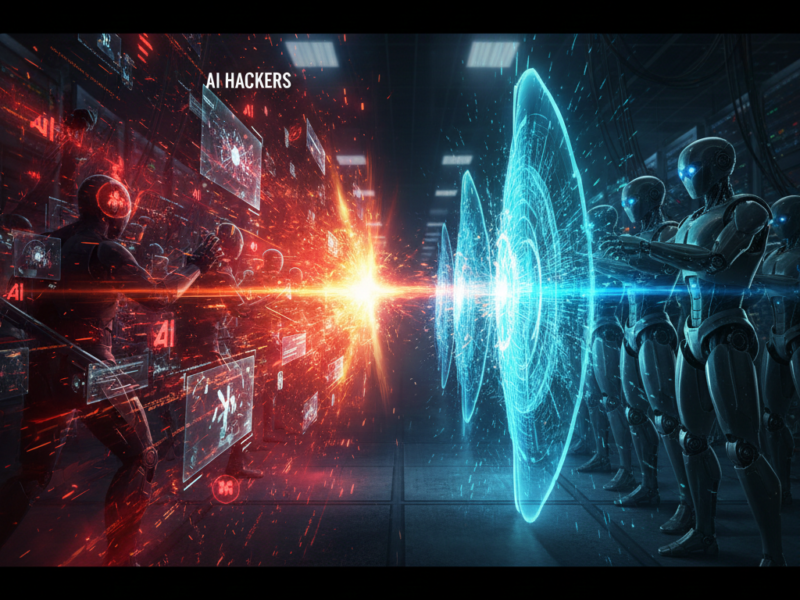
In the digital landscape of 2026, the old methods of protecting data are no longer just insufficient—they are dangerous. For decades, cyber security was built on the “Castle and Moat” strategy: building a strong perimeter around a network and trusting everyone inside. However, in an era of cloud computing, remote work, and sophisticated AI-driven attacks, this perimeter has dissolved. Enter **Zero Trust**. Zero Trust is not a single product, but a revolutionary security philosophy based on one simple, unwavering principle: **Never Trust, Always Verify**. In this modern era, every access request, whether it comes from outside or inside the network, must be fully authenticated, authorized, and encrypted before granting access.
The Collapse of the Traditional Perimeter
The rise of the hybrid workforce and the explosion of IoT (Internet of Things) devices have made the concept of a “secure internal network” obsolete. In 2026, data lives everywhere—on private servers, in public clouds, and on personal mobile devices. Attackers no longer “break in” to networks; they “log in” using compromised credentials. This reality has forced a move toward Zero Trust, where identity, not location, is the new security perimeter. If a user is at the office or at a coffee shop, their level of inherent trust remains exactly the same: Zero.
1. Continuous Authentication and Identity Verification
In a Zero Trust world, the “one-time login” is dead. Modern systems utilize **Continuous Authentication**. This means that the security layer constantly monitors user behavior, device health, and geographic location during a session. If an employee is logged in from London and suddenly their account shows activity from Tokyo five minutes later, the system instantly revokes access. This real-time vigilance is the only way to counter the speed of automated cyber threats in the 21st century.
Multi-Factor Authentication (MFA) Evolution
Traditional MFA (SMS codes) has become easy for hackers to bypass via SIM swapping. In 2026, Zero Trust architecture relies on **Phishing-Resistant MFA**, such as hardware security keys and behavioral biometrics. Behavioral biometrics analyze how a user types, moves their mouse, or holds their phone. This creates a unique “digital fingerprint” that is almost impossible for an AI or a hacker to replicate, ensuring that the person behind the screen is truly who they claim to be.
The Three Pillars of Zero Trust
To implement an effective modern security strategy, organizations in 2026 follow three foundational pillars. These pillars work together to create a layered defense that protects the most critical assets, even if a part of the network is compromised.
Pillar 1: Least Privilege Access
One of the biggest mistakes in legacy security was giving users broad access to the entire network. Zero Trust enforces the **Principle of Least Privilege (PoLP)**. This means a user is only given the minimum access necessary to perform their specific job, and only for the duration required. If a marketing manager doesn’t need access to the engineering database, they simply cannot see it. This dramatically reduces the “blast radius” of a potential attack.
Pillar 2: Micro-Segmentation
Micro-segmentation involves breaking the network into small, isolated zones. Each zone has its own security policies. If an attacker manages to compromise a single workstation, they are trapped within that small segment. They cannot “move laterally” through the network to reach sensitive financial or personal data. In 2026, AI-driven micro-segmentation is the standard, automatically creating and adjusting these zones based on real-time traffic patterns.
Pillar 3: Explicit Verification
Every request is a potential threat. Zero Trust requires explicit verification of every data point available: user identity, location, device health, service or workload, and data classification. Nothing is assumed to be safe. In 2026, this verification happens in milliseconds at the “Edge” of the network, ensuring that security does not slow down productivity.
The Role of AI in Zero Trust 2026
As hackers began using AI to launch “Hyper-Personalized” phishing and automated attacks, the defense had to evolve. Modern Zero Trust architectures are powered by **Predictive AI**. These systems analyze billions of signals per second to detect anomalies that a human analyst would never notice. For example, if an AI detects a slight change in the speed of data exfiltration, it can proactively shut down the connection before the breach is even confirmed. This “Autonomous Defense” is the backbone of modern digital sovereignty.
Zero Trust for Small Businesses
In the past, advanced security was only for large corporations. But in 2026, Zero Trust has been democratized. Small businesses now have access to “Zero Trust as a Service” (ZTaaS), allowing them to protect their customer data with the same level of sophistication as a global bank. This transition is crucial for maintaining public trust in the digital economy and ensuring that innovation is not stifled by cybercrime.
Conclusion: Embracing a Secure Future
Zero Trust is more than a technical upgrade; it is a cultural shift. It requires us to move away from the comfort of “implicit trust” and embrace the rigor of “explicit verification.” As we move forward into 2026 and beyond, Zero Trust will remain the gold standard for protecting our privacy, our identities, and our global infrastructure. By assuming the breach and verifying everything, we are not just building better firewalls; we are building a more resilient and trustworthy internet for everyone. The future of security is Zero Trust, and the future is now.